Composer and reconstructor
Philip Lane, light music composer and reconstructor of lost scores
born 1950
Almost every page on this site records something that has been lost. Philip Lane is the person who gets a measurable part of it back, by listening to a soundtrack and writing out what the orchestra played.
Working the other way round
Every page on this site ends up describing a loss. Library discs thrown out when the catalogue was superseded. Broadcasts taped over. Arrangements credited to an orchestra rather than a person. Paperwork destroyed while the music survived, leaving pieces that can be heard and not attributed.
Philip Lane works in the opposite direction. Born in 1950, he is a British composer in the light orchestral tradition, a generation younger than almost everybody else covered here, and his principal contribution to this repertoire is that he gets some of it back.
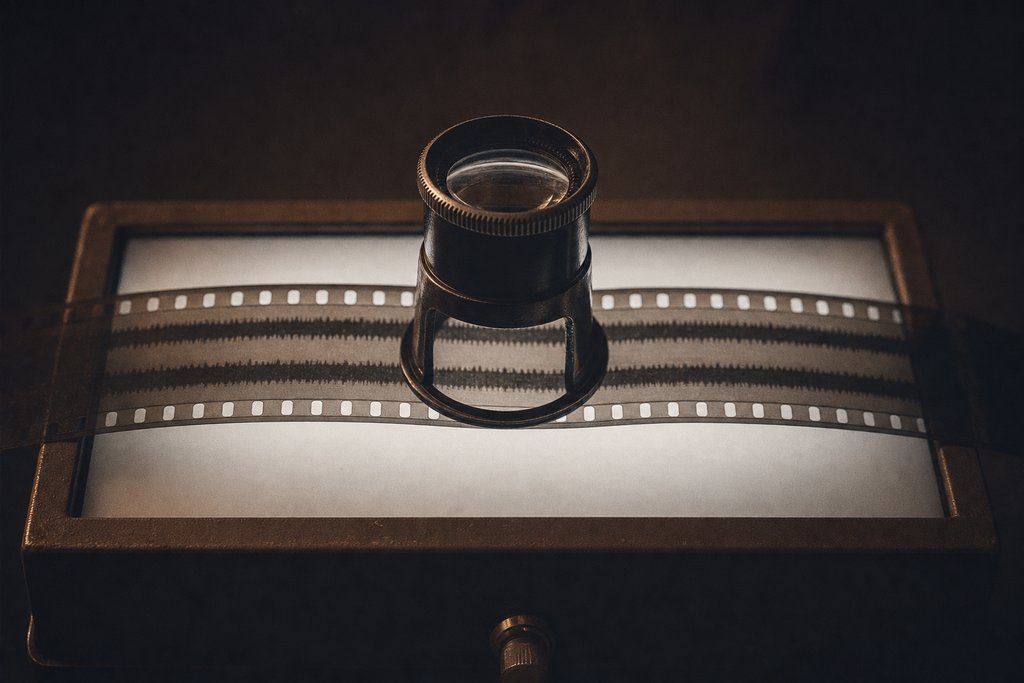
The method is transcription at full orchestral scale. Where a film score’s written parts no longer exist, he listens to the soundtrack and writes out what the orchestra played, in enough detail that an orchestra can play it again. Without that, a recording of the music is impossible: however celebrated the film and however good the score, no paper means no performance.
Why the paper is gone
The disappearance of film scores is not carelessness so much as an absence of any reason to care.
A studio’s music department produced score and parts to get a picture recorded. Once the recording was made, the paper had done its job. It occupied storage that cost money, it was of no commercial value, nobody was asking for it, and the idea that a British second feature of 1947 would one day be of interest to a record label would have seemed eccentric. So it was cleared, or lost in a move, or destroyed when a studio closed, and in most cases nobody recorded that it had gone.
What survived is the soundtrack, and it survived for an unrelated reason: it is physically part of the film. The music exists as sound because the film exists as an object. This is the exact inverse of the situation described under the recorded legacy, where library recordings were discarded while some of the paperwork survived, and it is why film music is the one part of this repertoire that reconstruction can actually reach.
What the work involves
A reconstruction from a soundtrack is a forensic exercise, and the obstacles are worth listing because they explain why so few people do it.
The recording is poor by design. An optical soundtrack of the 1940s is band-limited and noisy, with a dynamic range far narrower than the orchestra had in the room. Dialogue and sound effects were mixed over the music, frequently at the most interesting moments, and the music was often deliberately buried so as not to compete with speech. Reverberation smears inner parts. Two instruments doubling a line at the octave can be almost impossible to separate.
Against that, the reconstructor has to establish what every part in the texture actually plays. Not approximately, and not a piano reduction: which instrument, in which octave, with which articulation, against what accompaniment. And then, where the evidence genuinely does not resolve, make a decision.
That last point is where the craft lies. A gap in the evidence has to be filled with something a composer of that period, working for that studio, with that orchestra, would plausibly have written. Doing it well requires knowing the idiom from the inside, which is why a reconstructor who is also a composer in the tradition has an advantage that no amount of analytical skill supplies.
The kinds of decision that actually come up
Describing reconstruction as difficult is not much use without saying what the difficulties are, so here are the recurring ones.
Timbre confusion at the edges of the band. A muted trumpet and a cor anglais in the same register, heard through an optical soundtrack with the treble rolled off, are genuinely hard to separate, and the choice changes the colour of the passage. The same problem arises between viola and clarinet in the middle of the texture, and between celeste, harp harmonics and glockenspiel in the upper register, all of which were standard light orchestral colours and all of which flatten into each other on a poor transfer.
Doubling that may not be there. A line sounds thick, which could mean two instruments at the unison, or one instrument plus reverberation, or a single player in a resonant register. Deciding wrongly either adds a part the composer never wrote or removes one he did.
Passages under dialogue. Music mixed deliberately low behind speech is the commonest case and the worst evidence. The reconstructor knows something is happening and can often hear only the top line and the bass, with the middle inaudible. Filling it means writing what the composer probably wrote, on the basis of what he did in comparable passages elsewhere in the same score.
Whether an oddity is intentional. A strange voicing might be a deliberate effect, a copyist’s error that was played as written, a limitation of who turned up to the session, or an artefact of the recording. All four happen, and the surviving evidence usually cannot distinguish them.
None of this is soluble by better listening alone. Every one of those decisions is a judgement about what a particular composer, writing for a particular studio orchestra in a particular decade, would have done, and that is stylistic knowledge rather than analytical technique. It is the reason the work is done by composers in the tradition and not by transcription software, and the reason two competent reconstructions of the same score would differ in detail while agreeing on substance.
An edition, not a resurrection
Honesty about the status of the result is what separates good reconstruction from bad, and it is worth setting out.
Where the soundtrack is clear, a reconstruction should be identical to what was written, and a listener comparing them would hear no difference. Where the soundtrack is not clear, the reconstructor has inferred, and a different scholar working from the same evidence might infer something else. The output is therefore a performing edition: a defensible realisation of the music, not a recovered manuscript.
Reputable practice documents the difference, indicating in the score or the notes where the evidence ran out. That is ordinary scholarly method applied to a commercial product, and it is the reason these recordings can be used as evidence about the original scores rather than merely enjoyed.
If you are using a reconstructed score to make an argument about a composer’s orchestration, the sensible question is which passages rest on the soundtrack and which on inference. A good edition will tell you.
What it cannot do
Reconstruction recovers notes. It does not recover names, and that limit matters for this repertoire more than the successes do.
The library music described under Charles Williams and Trevor Duncan is in better shape acoustically than any film soundtrack: a library disc is a clean commercial recording of the piece alone, with no dialogue over it. Transcribing one would be straightforward by comparison. But with library music the open question is almost never what the notes are. It is who wrote them, and no amount of listening answers that. Where the catalogue paperwork is gone and the credit was a house pseudonym, the attribution is gone permanently.
The same applies to the wiped broadcasts discussed under working in light music. There is nothing to transcribe from. A performance that was never recorded leaves no acoustic trace, and reconstruction has no purchase on it at all.
So the mechanism works on exactly one part of the problem: music that was written down, lost as paper, and preserved as sound. That happens to describe a large quantity of British film music and very little else.
Composing in a closed tradition
The other half of the career deserves noting on its own terms. Philip Lane writes light orchestral music, which by the time he began was a tradition with no institutional support left: the BBC orchestras were being wound down, the recording libraries had moved to smaller forces, and the commercial demand described under British light music had gone.
Writing in an idiom after its market has closed is a different proposition from writing in it while the market exists. There is no library commissioning three-minute pieces, no house orchestra needing weekly material, and no publisher’s catalogue to enter. What remains is the recording market for this repertoire, which is small, and the concert programming of it, which is smaller.
That he does it anyway is what makes him useful to the reconstruction work rather than merely qualified for it. A tradition survives in two places: in its documents and in the hands of people who can still work in it. This site is largely about the first, and about how badly it has fared. The second is scarcer and less often counted, and it is the thing that makes the first recoverable at all. The judgement calls a lost score demands are the judgement calls of a working composer in the idiom, and the number of people who can make them is not large and is not growing.
Frequently asked questions
Who is Philip Lane?
A British composer, born in 1950, who works in the light orchestral tradition and is also the leading reconstructor of lost British film scores. Philip Lane belongs to a generation well after the composers who dominate this site, and his significance is double: he writes in the idiom, and he has recovered a substantial amount of it that would otherwise be unplayable.
What does reconstructing a film score mean?
Producing a performable full score for music whose written score no longer exists, working from the recorded soundtrack. The reconstructor listens, identifies every line in the texture, works out the instrumentation and the harmony, and writes the whole thing out so an orchestra can play it again. It is transcription at the level of a full orchestral score.
Why are film scores lost?
Because studios had no reason to keep them. Once a film was finished the paper had served its purpose, storage cost money, and nobody expected later interest. Scores and parts were discarded, destroyed in studio clearances, or simply not tracked. The soundtrack survives because it is part of the film; the music that was written down frequently does not.
How difficult is that work?
Extremely, and the difficulty is not musical so much as forensic. A 1940s optical soundtrack is noisy and frequency-limited, dialogue and effects sit on top of the music, and inner parts are often barely audible. The reconstructor has to distinguish what is actually played from what the recording only implies, and then make defensible decisions where the evidence runs out.
Is a reconstruction the same as the original?
Not exactly, and honest reconstructors say so. Where the soundtrack is clear the result should be identical. Where it is not, the reconstructor is inferring from style, from the composer's habits elsewhere and from what is playable, and a different scholar might infer differently. The result is a performing edition, and the good ones document where the inference begins.
Which scores has he reconstructed?
A large body of British film music from the 1930s to the 1950s, prepared for recording projects that have brought this repertoire back into circulation. The specific value is that the recordings could not exist without the reconstruction: no score means no performance, however famous the film or the composer.
Does he compose as well?
Yes, in the light orchestral idiom, which makes him one of the few active composers writing in this tradition rather than about it. That matters for the reconstruction work as well: somebody who writes this kind of music knows from the inside which orchestrational choice a composer of the period would have made, which is exactly the judgement a gap in the evidence requires.
Why does this matter to British light music?
Because the central problem of the repertoire is that its documentation is worse than its music. This site records the losses repeatedly: discarded library discs, wiped broadcasts, uncredited arrangements, destroyed paperwork. Reconstruction is the only mechanism that reverses any of it, and it works on the film music because there the sound survived even when the paper did not.
Could library music be reconstructed the same way?
In principle, and it is harder. A library disc gives a clean recording of the piece, which is better evidence than an optical soundtrack, so the transcription itself would be easier. The obstacle is different: with library music the question is usually who wrote it rather than what the notes are, and reconstruction cannot recover an attribution.
Is this work credited?
Properly, in this case. Reconstruction credits appear on the recordings and in the booklets, partly because the reissue market cares about provenance and partly because the work is too substantial to hide. It is a marked improvement on the treatment of the arrangers described elsewhere on this site, and it took until the end of the century to arrive.
- Sources
- Checked
- REF/PL-001 · 4 sources