The working life
Working in light music: the session player, the union and needle time
The reason the BBC maintained standing orchestras for fifty years was not musical policy. It was a contractual limit on how many hours of gramophone records the corporation was permitted to broadcast.
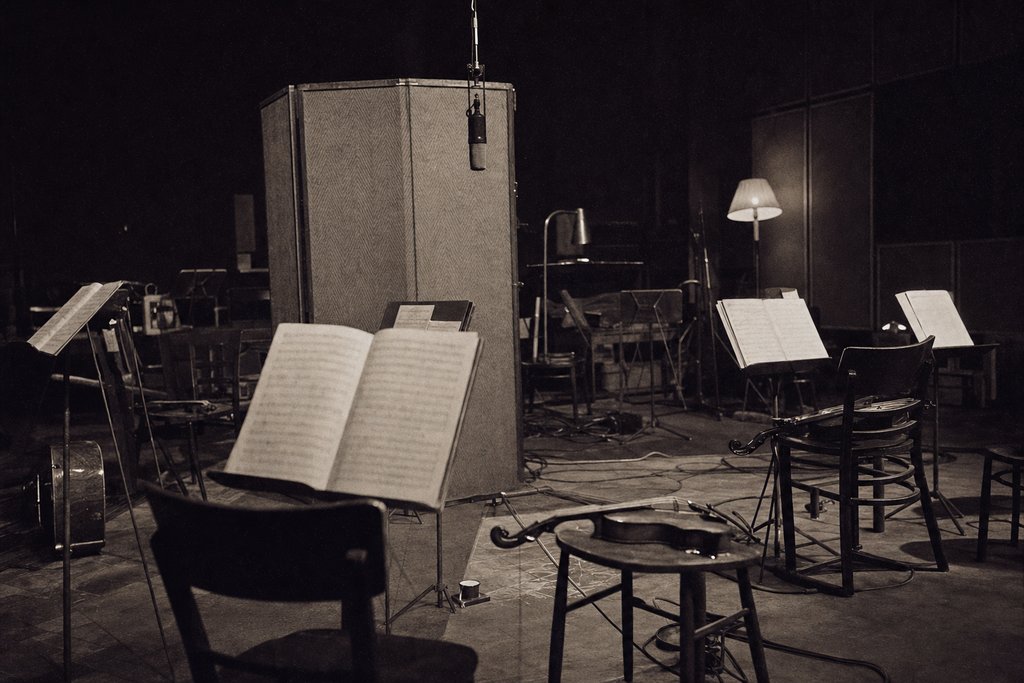
The rule that built the orchestras
The most consequential fact about British light music is not musical. It is that for around fifty years the BBC was contractually limited in how many hours of commercially issued gramophone records it could broadcast.
The restriction was known as needle time, and it arose from agreements with the record industry’s collecting body and with the Musicians’ Union. Both had reasons to want it. The record companies did not want radio substituting free listening for record purchase, and the union did not want its members replaced by discs. Their interests converged on the same answer, and the answer was a cap.
The consequence follows immediately. A broadcaster that cannot fill its schedule with records must fill it with musicians. That is why the BBC maintained standing orchestras, dance bands and regional ensembles on a scale unmatched anywhere in Europe, and why the Light Programme could consume orchestral music by the hour for two decades. The institutional home that British light music had was created by a contract clause.
What this meant for the schedule
Look at the situation from a producer’s desk in 1955. There are hours to fill, a strict allowance of record playing that is already spoken for, and a house orchestra on the payroll that has to be used because it is being paid either way.
The demand this generates is enormous and specific. It wants orchestral music in three to five minute units, playable at one rehearsal, in enough variety to fill a schedule without repeating, and it wants it continuously. It cannot wait for inspiration and it cannot afford anything requiring extended rehearsal. That is the exact specification of the repertoire described under British light music, and it was not a stylistic preference. It was a procurement requirement.
It also explains a feature of British broadcasting that puzzles listeners who encounter it later: recorded sessions of songs that already existed as records. When a pop record could not be played because the allowance was exhausted, the alternative was to have musicians play it live in a studio. Britain therefore accumulated a large archive of broadcast versions of songs whose commercial recordings were sitting unplayable in the library.
The session economy
Beneath the institutions was a labour market, and it was small, informal and closed.
The London recording business ran on fixers: contractors who kept lists of players and assembled an orchestra to a specification for a given date. A producer needing thirty players for Tuesday afternoon rang a fixer, and the fixer produced them. The list was the real structure of the industry. A player on it worked constantly; a player not on it did not work at all, however good, because there was no formal route in. Entry came through recommendation, deputising for somebody who was ill, and being known.
The pool was smaller than the volume of output suggests. The same players appear on light orchestral albums, library discs, film soundtracks, pop singles and broadcast sessions, frequently within the same week. If you listen to a British light orchestral record from 1958 and a British pop single from 1958, there is a reasonable chance the string section is the same people.
Nothing about this is recorded in the released product. Session sheets naming personnel were internal paperwork of no interest to anybody at the time, and the players were anonymous by design.
What the players were actually good at
It is worth describing the competence precisely, because “session musician” understates it.
A player arriving at a ten o’clock call had not seen the music. He was handed parts, given a downbeat after perhaps one run-through, and expected to record a finished take. The writing might be a light orchestral piece, a film cue with a click, a pop single with an unfamiliar rhythmic feel, or a library item in a pastiche idiom, and it might change to any of the others after a twenty-minute break. Intonation had to be right the first time because there was no editing worth the name for most of the period, and a single wrong note wasted the whole take and everybody else’s work with it. The best of these players could also fix a chart quietly while playing it, transposing a badly written part or adjusting an unplayable passage without stopping the session, which is a skill nobody wrote down and everybody relied on.
Where did that ability come from? Largely from the world described under light music before broadcasting. The generation staffing London studios in the 1940s and 1950s had been trained in cinema pits, resort orchestras and dance bands, where reading unfamiliar music correctly at speed was the daily requirement rather than an occasional test. The recording industry inherited a labour force it had not trained and could not have trained.
That inheritance ran out. When the studios’ demand collapsed there was no equivalent training ground producing replacements, because the pits and the pier pavilions had gone a generation earlier. This is part of why the repertoire is hard to perform convincingly now: the notes are available and the specific professional culture that played them is not.
The three-hour call
The unit of work was the session, and its shape determined the music.
A standard call ran three hours. Union agreements set the minimum fee for it, with additional payments for doubling on a second instrument, for overtime beyond the call, and in some cases for particular uses of the resulting recording. The employer was therefore buying a fixed block of time at a known price, and the object was to get as much finished, usable material out of it as possible.
Everything about the writing follows. An arrangement that needs a fourth take is losing money. A part that is awkward for the second horn costs rehearsal time that the schedule does not contain. A doubling requirement adds fees. A passage that only works if the players have seen it before cannot be used at all. The economical scoring that characterises this repertoire, remarked on throughout this site as a compositional virtue, is at least equally an accounting outcome: the arrangers who survived were the ones whose charts came in on time and on budget.
Repeat use, and the library problem
One question ran through the whole period and was never settled to everybody’s satisfaction: what happens when a recording made for one purpose is used for another.
For a commercial record the answer was reasonably clear. For a broadcast session it was negotiable. For a library recording it was genuinely difficult, because the entire commercial logic of a library is that a single recording is licensed over and over, across a long customer list, for years. A player paid once for a three-hour call might find his work in newsreels, documentaries, radio links and television for decades afterwards.
The negotiated answers varied by medium and by period, and they are the least glamorous and most practically important part of this history. They also explain why library music was commercially attractive to publishers: the recording cost was incurred once and the licensing income continued.
The end, and why it was not about taste
The standard account of light music’s decline attributes it to changing fashion. That is part of the story and it is not the mechanism.
Through the 1970s and 1980s the needle-time restrictions were progressively relaxed and finally abandoned. Once a broadcaster could fill airtime with commercially issued records, a standing orchestra became a large cost with nothing forcing it to exist. The BBC’s ensembles were reduced and then disbanded over that period, and the demand that had sustained some hundreds of professional orchestral musicians disappeared.
Taste had certainly moved. But an institution does not employ sixty players because its audience prefers them; it employs them because it must, and the moment the obligation lifted the calculation changed. The same technological logic that removed the cinema orchestras in 1929, described under light music before broadcasting, removed the broadcast orchestras sixty years later, with a contract standing in for the technology in the middle.
A labour history that mostly is not written
This page ends where the evidence does.
The agreements are documented in outline and the broadcasting consequences are visible in surviving schedules. What is very poorly recorded is the working lives. Who played on which recording, what they were paid, how the fixers’ lists actually operated, how a player got onto one, what the studios were like to work in: almost none of this was written down at the time by anybody with an interest in preserving it.
What exists is union records, some corporate paperwork, and recollection, most of it collected late and from the small number of participants who lived long enough to be asked. Edmundo Ros, discussed elsewhere on this site, is a case in point: his value as a witness came partly from living to a hundred.
If you are researching this repertoire and want to know who actually made the records, expect the composer to be traceable, the arranger to be uncertain, and the players to be anonymous.
Frequently asked questions
What was needle time?
A contractual limit on the number of hours of commercially issued gramophone records that the BBC was permitted to broadcast. The restriction came from agreements with the record industry and the Musicians' Union, both of which had an interest in radio not simply playing records all day. It is the single most important fact about the economics of British broadcast music.
Why did needle time matter?
Because a broadcaster that cannot fill its schedule with records has to fill it with musicians. The limit is the reason the BBC employed standing orchestras, dance bands and session players on a scale no other European broadcaster matched, and it is therefore the reason light music had an institutional home. Remove the restriction and the orchestras have no economic justification.
Who enforced it?
It arose from negotiation rather than legislation, between the BBC, the record companies through their collecting body, and the Musicians' Union. The record industry wanted to protect record sales and performers' income; the union wanted to protect its members' employment. Their interests aligned on the same conclusion, which is why the arrangement held for so long.
What did a session player do?
Turned up at a studio, was handed parts he had never seen, and recorded them correctly within a three-hour call. The work covered light orchestral records, library discs, film cues, pop singles and broadcast sessions, often in the same week and sometimes on the same day. Sight-reading was not a useful skill but the entire basis of employment.
How were sessions booked?
Through fixers, contractors who maintained lists of players and assembled an orchestra for a given date to a given specification. The fixer's list was the real structure of the London recording business: a player who was on it worked, and a player who was not did not, regardless of ability. It was a personal system with no formal entry route.
What was a session worth?
Union agreements set minimum fees for a standard call, with additional payments for doubling on a second instrument, for overtime, and for particular uses of the recording. Those rates are the reason light orchestral records sound the way they do: everything about the arrangement was shaped by keeping the number of players and the number of hours down.
Did musicians make repeat payments?
Under some arrangements and not others, and the distinction mattered enormously. A recording made for one use and then reused elsewhere raised the question of further payment, and the negotiated answers varied by medium and by period. Library recordings, licensed repeatedly across a long customer list, were a particular point of contention.
When did the system end?
Gradually, through the 1970s and 1980s, as the restrictions were relaxed and finally abandoned. Once a broadcaster could fill airtime with records, a standing orchestra became an expense with no compensating necessity, and the BBC's ensembles were reduced and then disbanded. The house orchestras did not die of changing taste alone; the contractual reason for their existence was removed.
Was the union's position justified?
It was defending its members against a technology that genuinely destroyed their employment, which had already happened once when sound film eliminated the cinema orchestras. Judged as industrial strategy it worked for fifty years, which few defensive positions manage. Judged from the listener's side it also produced a large quantity of live music that would not otherwise have been made.
Is this documented?
The agreements themselves are, in outline, and the broadcasting consequences are visible in schedules. Individual working lives are much less well recorded. Session sheets naming who played on which recording were internal paperwork, and the players themselves were anonymous by design, so the labour history of this repertoire rests heavily on recollection and on union records.
- Sources
- Checked
- REF/LM-WORK · 5 sources