Composer
Trevor Duncan, the BBC engineer who became a library composer
1924 – 2005
Trevor Duncan wrote under a pen name because he had a day job at the BBC, and the music he produced on the side ended up on a television title sequence and in one of the most admired experimental films ever made.
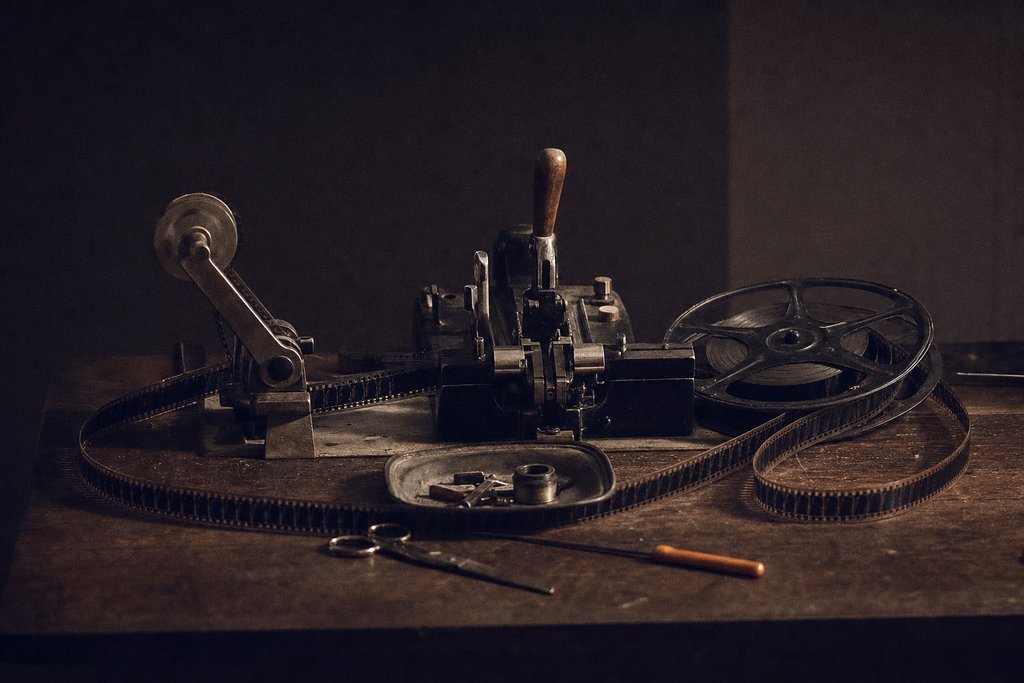
An engineer on the other side of the glass
Trevor Duncan spent his working days at the BBC as a sound engineer, and the name on his music was not the name on his employment file.
He was born Leonard Charles Trebilco in London in 1924, and he adopted Trevor Duncan as a professional name for composing. The reason was practical. A corporation staff engineer writing commercial music that the corporation might license and broadcast is in an awkward position, and a working name kept the two occupations from colliding.
He was self-taught as a composer, which places him with Ronald Binge rather than with the conservatoire-trained figures on this site, and the library trade had no view about that. What it wanted was material that did its job, arrived on schedule and could be recorded in one session.
What the engineering gave him
The day job was not incidental to the music, and this is the most interesting thing about him.
A balance engineer’s entire working life is spent listening to how an orchestra reproduces through a microphone, a chain of equipment and a transmitter. He hears, every day, which textures survive that chain and which collapse: where the double basses disappear, how much of the top of a violin section gets through, what happens to a dense chord when the dynamic range is compressed, why a melody in one register cuts through and the same melody an octave lower does not.
Those are exactly the constraints that shaped the whole repertoire, as set out under British light music. Almost every composer here learned them indirectly, by writing music, hearing the result and adjusting. Duncan learned them directly, from the desk, before writing a note.
You can hear it. His scoring is unusually clean, the melodic line is consistently placed where it will carry, and the accompaniment is spaced rather than piled up. Whether that is causation or coincidence cannot be proved from the outside, but the coincidence would be remarkable.
The library career
He wrote for the recorded music libraries, and he became one of the most-used composers in them.
The business is described under Charles Williams: a publisher commissions and records short orchestral pieces, indexes them by mood and duration, and licenses them to film, newsreel, radio and television producers who need a fixed number of seconds of a particular character. The composer is paid for the work and the publisher earns from the licensing, and the customer neither knows nor cares who wrote what he is buying.
Titles that circulated widely include High Heels, The Girl from Corsica and Twentieth Century Express. The names tell you what the catalogue entry was for: a mood, a place, a kind of motion. That is the vocabulary of the trade, and it is why a library title is often a better description of a use case than of a piece of music.
Pseudonyms were the system, not the exception
His working name looks like a personal arrangement. It was a normal feature of the trade, and the reasons are worth setting out because they explain a large part of why this repertoire is so hard to attribute.
Publishers had an interest in the appearance of variety. A library catalogue that credited forty pieces to four composers looks thin, and a customer choosing between suppliers is buying breadth, so house names and invented composer credits were used to spread a small stable of writers across a longer roster. Composers had the opposite interest in the same device: a writer under contract or on staff somewhere could supply a competing library under another name, and a prolific one could avoid the impression that a catalogue was one man’s work. Some names were the publisher’s property rather than the composer’s, and were reused across different writers, which means an attribution to a given name is not always an attribution to a person at all. Nobody in the arrangement was doing anything improper by the standards of the time, and nobody had any reason to keep a key.
That is the additional layer beneath the documentation problem described under Charles Williams. It is not simply that the paperwork was lost. Part of the record was deliberately obscured at the point of creation, by both parties, for ordinary commercial reasons.
The BBC dimension adds a third element. A corporation employee writing music that the corporation might license was in a position that a working name made simpler for everybody, and the separation was maintained rather than declared. Duncan’s case is unusually legible because the connection between the two names is now documented. In an unknown number of other cases it is not, and there is no way to estimate how many library composers of the period were broadcasting staff writing under cover.
If you are trying to establish authorship of a library piece from this era, the practical order is: the reissue booklet if one exists, then the publisher’s surviving catalogue, then a collector who knows the material, and then nothing. A name on a label is a starting point and not a conclusion.
The march that became Dr Finlay
The piece most people have heard is the march from A Little Suite, which the BBC adopted as the theme for the television series Dr. Finlay’s Casebook.
It is a light orchestral march of entirely orthodox construction, written for a catalogue with no television in mind. A producer wanted something that would establish a Scottish country practice in the 1920s within twenty seconds, went to a library, and found it. The tune then became the sound of that programme for its whole run and, for a generation of British viewers, the sound of a particular kind of period gentleness.
This is the fourth or fifth time this exact sequence appears on this site, and the repetition is the point. Eric Coates, Ronald Binge, Haydn Wood, Charles Williams and Duncan all became widely known through a decision made by somebody else in a scheduling or production office. None of them wrote for the purpose. It was the standard route by which this repertoire reached the public, and it was entirely outside the composer’s control.
La Jetée
The other notable use of his music is a long way from BBC light entertainment.
Chris Marker’s La Jetée, made in 1962, is a short film composed almost entirely of still photographs, telling a story of time travel after a nuclear war. It is among the most admired experimental films ever made and has been endlessly analysed. It uses Trevor Duncan’s music.
What makes this worth recording is not the prestige by association but what it demonstrates about how library music worked. A piece written in London for a publisher’s catalogue, to be licensed to anybody who wanted three minutes of a particular mood, was selected by a French avant-garde film-maker because it did what his film needed. He was not hiring a composer; he was shopping in a catalogue. The system was completely indifferent to the artistic ambition of the customer, which is why the same material can be found under a newsreel about tractor production and under one of the canonical works of experimental cinema.
It also means Duncan had no involvement in, and possibly no knowledge of, one of the most durable uses of his music. There is a further consequence worth drawing out. Because a library licence gave the customer the right to use the recording without consulting anybody, the composer had no control over context at all: the same piece could accompany a documentary, an advertisement, a public information film and a work of art cinema, and nothing in the arrangement let him decline any of them. For a body of music that is routinely described as safe and conservative, that is a strange freedom, and it produced placements no composer would have predicted.
A catalogue behind two names
The documentation problem here is the standard library one with an additional complication.
Library paperwork was never public, catalogues indexed by mood rather than by composer, pieces were re-cut and re-titled between libraries, and publishers did not systematically retain records. All of that applies to him as it applies to every composer in the trade.
On top of it, his output is under a working name while his BBC career is under his legal one, and nothing connects the two automatically. A researcher approaching from the broadcasting side finds an engineer; a researcher approaching from the music side finds a composer; and the fact that they are the same man has to be known in advance rather than discovered.
The result is that no complete list of his work exists, and the fragments that circulate come from reissue booklets and from collectors. If you find a light orchestral piece of the 1950s or 1960s that sounds like his and carries no attribution, it may well be, and there is no register you can check.
He died in 2005.
Frequently asked questions
Who was Trevor Duncan?
An English composer, born Leonard Charles Trebilco in London in 1924 and active until his death in 2005. Trevor Duncan was the professional name he used for composing. He worked as a sound engineer at the BBC and was self-taught as a composer, and he became one of the most frequently used writers in the British recorded music libraries.
Why did he use a pen name?
Because he was a BBC employee writing commercial music on the side, and a staff engineer with an outside interest in the material the corporation might broadcast was in an awkward position. A working name kept the two halves of his life separate. It also, incidentally, means his catalogue and his employment record are filed under different names.
What is his best-known piece?
The march from A Little Suite, which became the theme for the BBC television series Dr. Finlay's Casebook. It is a straightforward light orchestral march, written with no television in mind, and its adoption follows exactly the pattern set out across this site: a producer chose a library piece and the association became permanent.
Was he a trained composer?
Self-taught, which was not unusual in this field. He learned by working in broadcasting, where he heard orchestras every day from the technical side of the glass and could see what worked, and by writing. The library trade cared about whether a piece did its job and arrived on time, not about a conservatoire diploma.
What did being a sound engineer contribute?
An unusual perspective. A balance engineer spends his working life listening to how orchestral textures reproduce through a microphone and a transmitter, which is precisely the constraint that shaped this repertoire. Somebody who knows from the desk which registers survive and which disappear has a practical advantage over a composer who only knows the score.
Is his music in La Jetée?
Yes. Chris Marker's 1962 short film, one of the most admired experimental films ever made, uses his music. It is a striking example of what library music actually did: a piece written for licensing to any producer who wanted it turns up in an avant-garde French film, chosen from a catalogue by somebody looking for the right character rather than the right composer.
How much did he write?
A large quantity, though no complete figure is available, which is the normal position for a library composer. The catalogues he wrote for issued his pieces continuously over decades, and the same material was licensed, re-cut and re-issued across the whole period. Titles in circulation include High Heels, The Girl from Corsica and Twentieth Century Express.
What does library music sound like at its best?
Distinctive within severe constraints. A library piece has seconds to establish a mood, has to sustain it without development, and must be cuttable at almost any point. His work stands out because the ideas are strong enough to register instantly and the orchestration is clean enough to survive being played under dialogue, which is a narrower target than it sounds.
How does he compare with Charles Williams?
They are the same profession a generation apart, and both are archetypes of it. Charles Williams came from the cinema pits and the film industry; Trevor Duncan came from broadcasting engineering. Both wrote enormous quantities of material for catalogues, both had a piece adopted as a broadcast signature, and both are far better known by their music than by their names.
Where can his music be found?
On the specialist light music reissue series, which have transferred a reasonable amount of the library material, and in the soundtracks of whatever happens to have licensed it. The full catalogue is not assembled anywhere. Because he wrote under a working name and the library paperwork was never public, establishing what is his remains an open task.
- Sources
- Checked
- REF/TD-001 · 5 sources