Composer and conductor
Leighton Lucas, from the Ballets Russes to the British film studios
5 January 1903 – 1 November 1982
Leighton Lucas danced for Diaghilev as a teenager, taught himself composition, and wrote the score for the film that everybody remembers for somebody else's march.
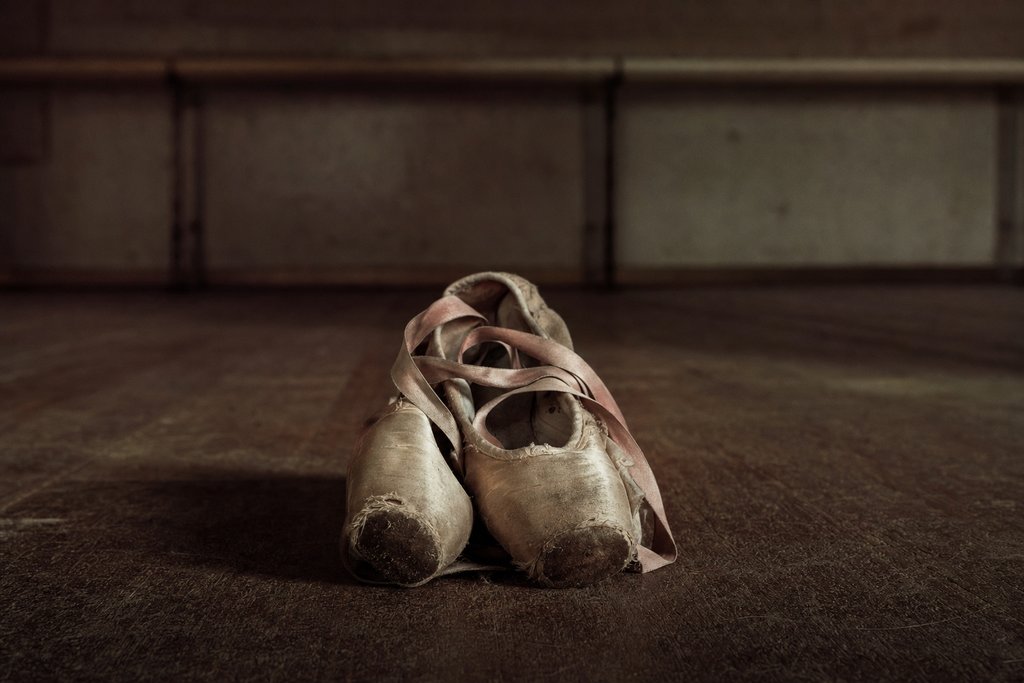
A dancer in the Ballets Russes
Leighton Lucas started his professional life on stage as a dancer, with Diaghilev’s Ballets Russes, and that single fact separates him from every other figure on this site.
He was born in London on 5 January 1903 and joined the company as a young man. The Ballets Russes was the most consequential dance organisation of the early twentieth century and the commissioner of scores that changed European music. A teenager in its ranks was in a rehearsal room hearing modern orchestral music taken apart and put back together, night after night, as a matter of routine employment.
He never had a conservatoire composition training. What he had instead was that, and it is a better education than it sounds. A dancer learns music from the inside of the beat, in a room where an orchestration either supports the movement or does not, and where a conductor’s tempo decision is immediately physical.
From dancing to conducting
He moved from performance into conducting, which is the ordinary progression for a musically capable dancer and an unusual one for anybody else.
Ballet conducting is a specific and undervalued discipline. The conductor is not simply setting a tempo but negotiating one, following dancers whose bodies impose limits that the score does not acknowledge, holding a phrase for a lift, and adjusting continuously without the music losing shape. It is accompaniment at the highest technical level, performed live, with no possibility of a retake.
Lucas did a great deal of it, for ballet companies and in the theatre, and this is where most of his working life went. It is also, for the purposes of a reference work, almost entirely invisible. A conducting career in the theatre leaves programmes and reviews and no artefact.
Why the ballet training mattered to the films
When he began writing for film in the 1940s he arrived with a skill set that fitted the medium unusually well, and it is worth spelling out why.
A ballet score has to match continuous physical action, with no dialogue to carry the narrative and no opportunity to stop and explain. It must sustain a tempo somebody can actually move to, shape a scene through purely musical means, and change character on a visual cue. Those are the requirements of film scoring almost exactly, and he had met them in a harder form, live, where a mistake cannot be edited.
Compare the other routes into the profession represented on this site. Ron Goodwin came from commercial arranging and brought a gift for the memorable theme. Charles Williams came from the cinema pits and brought speed and economy. Trevor Duncan came from broadcast engineering and brought an ear for what survives transmission. Lucas came from the stage, and what he brought was motion: his music moves with a picture rather than commenting on it.
What a ballet score has to do
Since the ballet background is the argument of this page, it is worth describing the demands concretely rather than asserting that they were formative.
A dance score is timed to bodies. A step takes as long as it takes, a lift needs a specific number of beats at a specific tempo, and a dancer who is given four bars where the choreography needs five does not adapt; the movement fails. So the composer works to counts supplied by the choreographer, and the counts are not negotiable in the way a film’s timings are, because a film can be re-cut and a body cannot.
The rehearsal process compounds this. Dancers learn a work over weeks to a piano reduction played by a repetiteur, so by the time the orchestra arrives, usually very late in the process, the choreography is set to a particular tempo and a particular articulation that the pianist established. The orchestral sound is then fitted around something already fixed. An orchestration that obscures the beat the dancers have learned to count is not a stylistic choice but a failure, and it will be discovered in the last week before opening with no time to rewrite.
Then there is the performance itself, which is where the conductor’s problem starts. Bodies vary night to night. A dancer who is tired, injured or simply carrying a slower tempo needs the music to accommodate it, within limits that the score’s structure sets, and the conductor is watching feet as much as reading a page. Holding an orchestra together while continuously adjusting to a soloist you can barely see, in a work the audience knows, is among the harder jobs in conducting and it is almost never described as such.
Now compare film. The timings are fixed and given, which is the same discipline. The music must support action without competing with it, which is the same discipline. But the picture cannot get tired, cannot land a jump late, and can be adjusted in the cutting room if the music does not fit. Film scoring is ballet scoring with the hardest variable removed.
That is why the trajectory makes sense in one direction and would not in the other. A film composer moving into ballet would find a set of constraints he had never faced. A ballet musician moving into film finds a familiar problem with the difficulty reduced, and he arrives already knowing how to write music that moves with something rather than about it.
The Dam Busters, and a comprehensive misattribution
His best-known credit is the one nobody attributes to him.
The Dam Busters, released in 1955, is scored by Leighton Lucas. The film also uses The Dam Busters March, written by Eric Coates, and the picture credits both men. The march is the most famous piece of British film music of its decade, played by bands who have never seen the film, and it has absorbed the entire musical reputation of the picture.
The result is that the composer of about ninety minutes of film music is remembered, when at all, as an afterthought to four minutes he did not write. It is not a scandal and nobody behaved improperly: Coates wrote a march, the producers used it, and it was better at being memorable than anything else in the score. But it is a very pure example of the mechanism this site keeps documenting, in which the piece that gets adopted takes the credit for everything around it.
Ice Cold in Alex and Hitchcock’s Stage Fright are the other film credits most often cited, and the wartime documentary Target for Tonight is the earliest of the significant ones.
Concert music, without a constituency
He also wrote concert music, and it went nowhere, for reasons that had little to do with its quality.
British music in his lifetime had recognisable camps: the pastoral and folk-derived tradition, the modernists who arrived after the war, and the light music trade that this site describes. A composer whose background was dance, whose day job was conducting and whose film work was in a genre critics ignored fitted none of them. He had no natural advocates, no institutional home, and no critical framework that wanted to place him.
That is a different kind of neglect from the anonymity of the library composers. Charles Williams was invisible because his work was published in a way that hid the author. Lucas was visible and uncategorised, which in British musical life of the period was arguably worse. An anonymous composer at least has a body of work waiting to be attributed to him once somebody does the archival labour. An uncategorised one has work that is properly credited and that nobody has a reason to look for, because it does not belong to any of the arguments critics were having.
The three ways he vanished
It is worth setting the losses out together, because they compound rather than merely add.
The film work is credited and survives, and its most famous instance is remembered as another composer’s. The conducting was the largest part of the career and produced no permanent record at all, because live theatre accompaniment does not. The concert music exists on paper and had nobody to argue for it.
Almost nothing has been recorded. Where film scores of this period are recoverable it is generally through the reconstruction work described under Philip Lane, which depends on a soundtrack surviving and on somebody deciding the score is worth the labour.
He died on 1 November 1982. A man who began by dancing for Diaghilev and ended by writing music for British war films has one of the more remarkable trajectories in twentieth-century British music, and there is no book about him.
If you want a single illustration of how this repertoire’s history got written, it is here. The march from his most famous film is played by bands across the country every year. The film’s actual score is barely recorded. The conducting that occupied most of his working life left nothing at all. And the reason is not that anybody judged the work and found it wanting, but that three separate accidents of documentation all ran the same way at once.
Frequently asked questions
Who was Leighton Lucas?
An English composer and conductor, born in London in 1903 and active until his death in 1982. Leighton Lucas began his career as a dancer with Diaghilev's Ballets Russes, moved into conducting, and became a film composer and ballet conductor. He was largely self-taught as a composer.
Did he really dance for Diaghilev?
He did, as a young man, with the Ballets Russes, which was the most influential dance company of the early twentieth century and the commissioner of some of the most important scores of the period. It is an unusual starting point for a film composer and it left him with an understanding of how music and physical movement fit together that very few of his colleagues had.
What did he score?
British films from the 1940s to the 1960s, among them the wartime documentary Target for Tonight, Hitchcock's Stage Fright, Ice Cold in Alex and The Dam Busters. He also worked extensively as a conductor, particularly for ballet, and wrote concert music.
Did he write the Dam Busters March?
No, and this is the confusion worth clearing up. The march is by Eric Coates. Leighton Lucas wrote the rest of the score for the 1955 film, and the picture credits both men. The march is what everybody remembers, so the composer of the actual film music has been comprehensively overshadowed by a title theme he did not write.
What did the ballet background give him?
Timing, and a particular understanding of pacing. A ballet score has to match physical action continuously, sustain a tempo a dancer can work to, and shape a scene without dialogue to lean on. Those are the exact requirements of film scoring, arrived at from a different direction, and he had them before he ever saw a cutting room.
Was he formally trained?
Largely self-taught in composition, like Ronald Binge and Trevor Duncan. What he had instead was practical immersion: years inside a first-rank dance company hearing modern scores rehearsed and performed nightly, which is an education of a kind no conservatoire offers.
Did he conduct as well as compose?
Extensively, and it was probably the larger part of his working life. He conducted for ballet companies and in the theatre, which is demanding and largely undocumented work: a ballet conductor has to follow dancers as much as lead them, and the results leave no recorded trace unless somebody happened to be taping.
How does he fit with the other film composers here?
He is the one who came from performance in a different art form. Ron Goodwin came from arranging, Charles Williams from cinema pits, Trevor Duncan from broadcast engineering. Lucas came from the stage as a dancer, which is rarer and shows in the way his music handles motion.
Is his music available?
Thinly. Some film scores have been recorded or reconstructed for soundtrack releases, and his concert music appears occasionally. The ballet conducting is essentially unrecorded. He is one of the composers for whom the reconstruction work described under Philip Lane is the main route by which anything new becomes hearable.
Why is he not better known?
Three reasons compounding. His most famous film is remembered for another composer's march. His largest activity, ballet conducting, produces no permanent artefact. And his concert music was written outside the fashions of British music in his lifetime, so it had no advocates. Any one of those would have hurt; together they are close to erasure.
- Sources
- Checked
- REF/LL-001 · 5 sources