Composer and arranger
Ronald Binge, the arranger behind Elizabethan Serenade and Sailing By
15 July 1910 – 6 September 1979
Ronald Binge learned his trade in cinema pits and seaside bands, and the two things he is remembered for are a piece played nightly on Radio 4 and a string technique that gave another man's orchestra its identity.
Derby, the cinema pit and the seaside
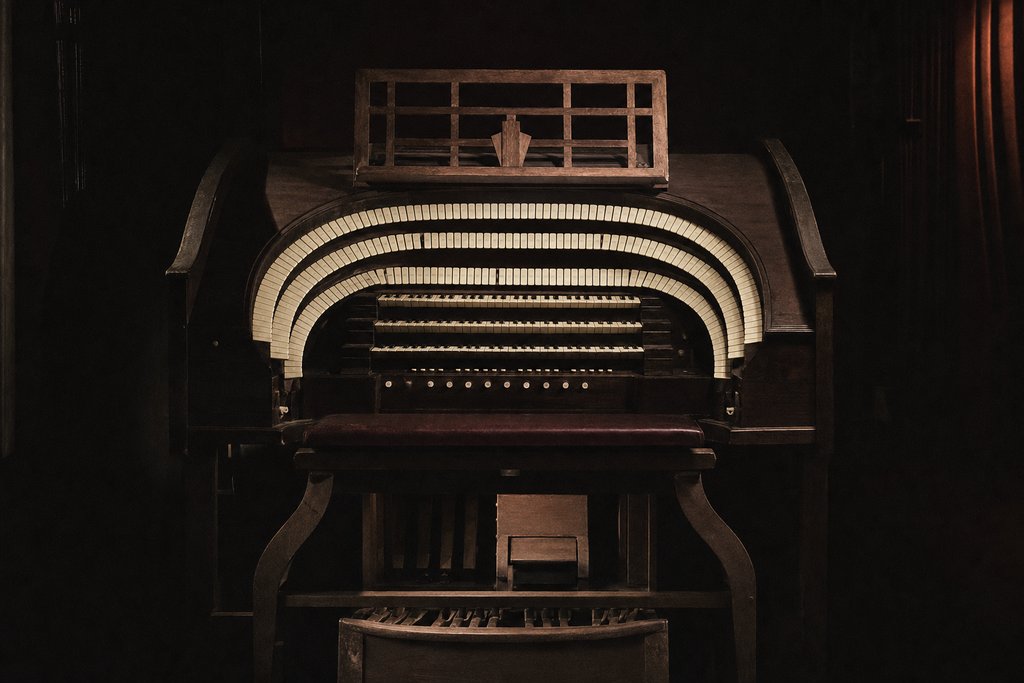
Ronald Binge learned to write for players by sitting among them. Born in Derby on 15 July 1910, he had organ and piano lessons as a boy and no formal training in composition, and his first professional work was accompanying silent film, where the job is to produce continuous music that matches action nobody has rehearsed to. From there he moved into theatre and seaside orchestras.
This is the standard biography of a British light music composer, and it is worth stating plainly because it contradicts the usual assumption about how orchestral music gets written. Binge had no conservatoire behind him. What he had was thousands of hours of practical experience of which combinations of instruments work, produced under conditions where a mistake is audible immediately and cannot be fixed in the next rehearsal, because there is no next rehearsal.
Ronald Binge took up the accordion, which was a working musician’s instrument in the 1930s rather than a novelty, and it was as an accordionist that he joined the orchestra that would define his career.
Mantovani, and the sound that was not his name
Ronald Binge joined Mantovani’s orchestra in the 1930s and became its principal arranger. Over the following two decades he wrote the charts that turned a competent light orchestra into one of the most commercially successful recording ensembles in the world.
The decisive contribution came in the early 1950s. Binge devised a way of dividing the string section so that the parts entered in staggered, overlapping lines, each group sustaining while the next arrived. The effect is an artificial reverberation produced by the players themselves. In an era before reverberation could be convincingly added after the session, this gave Mantovani’s records a spatial quality that nothing else on the market had, and it made them recognisable within a few bars.
The technique is generally called cascading strings, and it was copied across the industry. It is probably the single most influential piece of orchestral craft to come out of British light music, and it is attached in the public mind to the name on the record label rather than to the man who worked it out.
How the cascade actually works
The technique is easier to describe than the name suggests, and the description matters because the name has become vague through repetition.
An orchestral string section normally plays a chord with all the players arriving together and leaving together. Binge split the section into groups and gave each group a different note of the chord held for a long value, with the entries staggered so that a new group arrives while the previous ones are still sounding. As the music moves on, one group is always still holding the previous harmony while another has already reached the next. The overlap is what the ear reads as reverberation: sound apparently persisting in a space, produced entirely by the writing.
Two things follow. The first is that the effect needs numbers. It cannot be done with a small section, because every group has to be big enough to sound like a section in its own right, which is why the records that use it were made by large orchestras and why it did not transfer to the light orchestra of thirty players. The second is that it constrains the harmony: the writing has to change slowly enough for the overlaps to make sense, so a cascading arrangement cannot also be harmonically busy. Binge’s plain diatonic style is not a limitation working against the technique. It is what makes the technique possible.
The reason it mattered commercially is a matter of dates. In the early 1950s, reverberation could not be added convincingly after a session; the echo chamber was a room, and what it did to a recording was crude and hard to control. An orchestra that arrived at the studio already carrying its own acoustic had a decisive advantage on record, and it kept that advantage until studio technology caught up.
Charmaine, and what followed
The record that established the sound was Mantovani’s 1951 recording of Charmaine, an old waltz rearranged by Binge using the divided-string method. It sold in very large numbers, in the United States as well as in Britain, and it turned a working light orchestra into an international recording property.
What followed was a long series of albums built on the same principle, and an industry-wide imitation of it. The commercial logic was straightforward: the arrangement, not the repertoire, was the product. The tunes were mostly familiar, often old, and the reason to buy the record was the way the strings sounded. That is an unusual position for an arranger to be in, and it is the strongest argument for treating Binge as a significant figure rather than as a supplier of charts.
It also fixed his professional position. An arranger whose method sells records is valuable precisely where he is, and there was little commercial reason for anyone to put his name on the front of a sleeve.
Elizabethan Serenade, and the pieces under his own name
Binge’s own catalogue is smaller than his arranging output and more varied than his reputation implies.
Elizabethan Serenade, written in 1951, is the best known. It is a string serenade of great simplicity, with a harmonic rate of change slow enough that the melody has to carry the whole piece, and it does. The work was composed under a plainer working title and renamed in the period around the coronation, when an Elizabethan association was worth having, and it later brought him an Ivor Novello Award.
Sailing By, from 1963, is the piece more people have heard. It is a slow waltz, and it was written to a specification that is closer to engineering than to composition: BBC Radio 4 needed something to occupy a variable gap before a bulletin that starts at a fixed time. The music therefore has to be capable of being faded in or out at any point without sounding interrupted, which means no strong cadences and no dramatic shape. That constraint, met exactly, is why it has never been replaced.
Against these sit two works that show what he could do when nobody was setting the brief. The Watermill, from 1958, is a short piece for oboe and orchestra and the most finely made thing in his catalogue. And in the mid-1950s he wrote a concerto for alto saxophone and orchestra, an instrument almost nobody in British concert music was writing for at the time.
Ronald Binge’s craft
Ronald Binge’s writing is the opposite of Farnon’s, and the two make a useful pair for understanding the range within a single genre.
Farnon’s interest is harmonic: chords are voiced so the inner parts carry independent lines, and the music moves even when the tune is static. Binge does almost none of that. His harmony is plain, often diatonic, and it changes slowly. The effects come from two other places. The first is string texture, which is where the cascading technique belongs and which he used in his own pieces as well as in Mantovani’s. The second is melodic construction: his tunes are built from short phrases that repeat with small alterations, and they lodge in the memory because there is very little to remember.
Neither approach is more sophisticated than the other. They are answers to the same question, which is how to make a modest orchestra sound like itself and nobody else, and both men answered it in the only way that mattered commercially, on record.
Sailing By, and what the credits do not tell you
Here is the problem this page cannot resolve. Binge’s arranging for Mantovani is the largest and most influential part of his work, and it is almost entirely unattributed on the records themselves. A bandleader’s orchestra issued its recordings under the bandleader’s name, and the arranger appeared, if at all, in small print or not at all.
That leaves two questions genuinely open. The first is how much of the Mantovani catalogue is Binge’s work, which is not documented in any complete form. The second is how the cascading-strings idea should be apportioned: it is credited to Binge, and the credit appears to be sound, but it was developed inside a working relationship with a bandleader who had his own strong ideas about the orchestra’s sound, and no contemporary document sets out who proposed what.
If you are trying to establish whether a particular Mantovani arrangement is his, session paperwork is the only route, and it survives unevenly and mostly in private hands. Absence of a credit is not evidence of absence of involvement.
Later years and afterlife
Binge continued to compose and to conduct after leaving the Mantovani orchestra, working with British orchestras and writing for the publishers’ recording libraries alongside his concert pieces. He died on 6 September 1979, aged sixty-nine.
Ronald Binge’s music survives in two separate streams that rarely meet. The Mantovani catalogue is continuously in print and continuously reissued, carrying his arrangements under another name. His own pieces appear on the specialist reissue series devoted to British light music, discussed under recordings, and two of them are in permanent circulation for reasons that have nothing to do with the record industry: one introduces a radio programme, and the other has been played to the British coastline every night for over half a century.
Frequently asked questions
Who was Ronald Binge?
An English composer and arranger, born in Derby in 1910 and active until his death in 1979. He was largely self-taught, began as a cinema organist and pianist, and spent his central years as arranger to Mantovani's orchestra. He is remembered for two very different achievements: a small group of orchestral pieces still in daily broadcast use, and the string technique that made Mantovani's records identifiable.
What is Sailing By?
A short orchestral waltz written by Ronald Binge in 1963 and used by BBC Radio 4 before the late-night shipping forecast. Its function is technical as much as musical: it fills a gap of variable length before a bulletin that must begin at a fixed time, so it can be faded in or out at any point without damage. It is also gentle enough to be recognisable at low volume, which matters to a listener at sea.
What is the Elizabethan Serenade?
Binge's best-known concert piece, written in 1951 and later given an Ivor Novello Award. It was composed under a plainer working title and renamed during the period around the coronation, when the Elizabethan association was commercially useful. The piece is a straightforward string serenade, and its success rests on a melody that stays memorable at a very slow harmonic rate.
What are cascading strings?
A method of dividing an orchestral string section so that the parts enter in staggered, overlapping lines, producing an artificial reverberation from the players rather than from the room or from studio equipment. Binge devised it for Mantovani in the early 1950s. The effect gave those records an immediately identifiable sound at a time when reverberation could not easily be added afterwards, and it was widely imitated.
Did Ronald Binge work for Mantovani?
Yes, for roughly two decades, and they were his most productive. He joined Mantovani's orchestra as an accordionist in the 1930s and became its principal arranger, writing the charts that established the orchestra's commercial identity. The relationship is the central fact of his career and also the reason his name is less known than his work: the records were issued under Mantovani's name, as was normal for a bandleader's orchestra.
Was Ronald Binge formally trained?
Very little. He had organ and piano lessons as a boy in Derby but no conservatoire training in composition, and he learned orchestration by doing it, first in cinema pits accompanying silent film and then in theatre and seaside orchestras. That background is audible in the practicality of his writing. It also puts him in a large group within British light music: the field was full of self-taught craftsmen rather than academy composers.
What else did Ronald Binge compose?
More ambitious concert music than his reputation suggests. The Watermill, from 1958, is a short piece for oboe and orchestra and one of his best. He also wrote a concerto for alto saxophone and orchestra in the mid-1950s, an unusual undertaking for a composer working in this field, and a body of shorter orchestral items issued through the publishers' recording libraries.
Why is Sailing By still used?
Because nothing else does the job as well. The late shipping forecast is a fixed point in the Radio 4 schedule and the material before it is not, so the network needs a piece that can be started, faded and cut at will. Sailing By was written to that shape. Its continued use has also made it a marker of the end of the broadcasting day for listeners with no interest in shipping at all.
How does Binge's music differ from Farnon's?
Almost entirely. Robert Farnon's writing is harmonically rich and derives from North American dance-band practice; the interest is in the movement of the inner parts. Binge works with far simpler harmony and much slower rates of change, and his effects come from string texture and from melodic shape. Both were arrangers first, but they solved the problem of making an orchestra sound distinctive in opposite ways.
Is his music available on record?
Yes, through two routes. The Mantovani catalogue, on which a great deal of his arranging survives, has been reissued extensively and continuously, though the arrangements are credited to the orchestra rather than to him. His own pieces appear on the specialist British light music reissue series alongside those of his contemporaries, and The Watermill and the saxophone concerto have both been recorded in their own right.
- Sources
- Checked
- REF/RB-001 · 5 sources