Bandleader and percussionist
Edmundo Ros, the bandleader whose Latin dance band became an orchestra
7 December 1910 – 21 October 2011
Edmundo Ros came to London in 1937 to study percussion at the Royal Academy of Music, and spent the next forty years running the most successful Latin American dance band Britain has had.
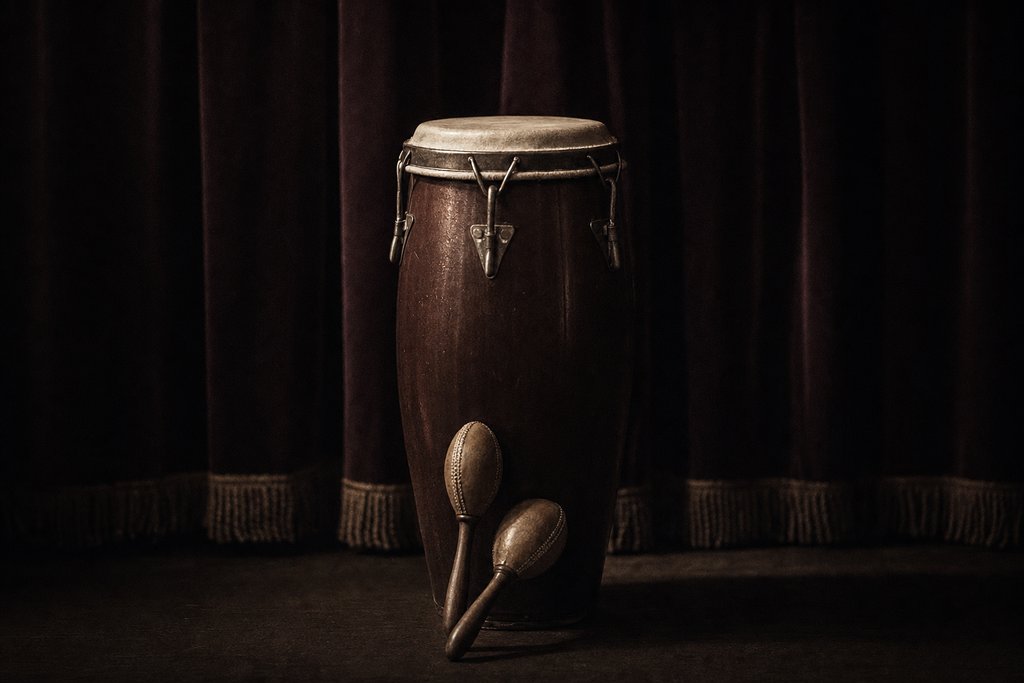
Edmundo Ros: Port of Spain to the Royal Academy
Edmundo Ros arrived in London in 1937 to study percussion at the Royal Academy of Music. He was twenty-six, from Port of Spain in Trinidad, and he came as a student rather than as a performer looking for work.
The distinction matters, because it separates him from most of the musicians who brought Caribbean and Latin American music to Britain in the same decades. He had formal conservatoire training in London, in the same institution that trained Eric Coates and Haydn Wood, and he read and wrote music professionally. When he began leading a band he was not an exotic import being managed by somebody else. He was a trained musician running his own operation.
He did not go home. Trinidad was then a British colony, London was the imperial capital, and a Trinidadian musician in London in the late 1930s occupied a position that was simultaneously advantageous and constrained: he had a claim to authenticity that no British bandleader could match, and he was selling into a market that wanted the music on its own terms.
Building the Latin dance band
Edmundo Ros formed his own ensemble and worked the London dance circuit, and the timing was fortunate. Latin American dance forms were arriving in Britain in sequence through the 1930s and 1940s, each one briefly fashionable, and a band that could play them credibly had a standing advantage over one that was adapting.
What a Latin dance band in London actually played was therefore a moving target: the repertoire changed with the fashion, and the ensemble that survived was the one that could change with it.
The instrumentation put percussion at the front, which was the point. A British dance band of the period was built around saxophones and brass with a rhythm section that kept time and stayed out of the way. Ros reversed the emphasis: the percussion carried the identity and the melody instruments were arranged around it. For dancers, who were the paying customers, that was the whole difference.
He also sang, in a light and deliberately accented style that became part of the product. This was commercial positioning as much as musicianship, and it worked.
The war years helped rather than hindered him. London nightlife continued through the bombing, the demand for dance music went up rather than down, and conscription thinned the ranks of British musicians competing for the same rooms. A bandleader who was not liable for British call-up and who had a repertoire nobody else could play properly was in an unusually strong position, and the residencies he established in that period are the foundation everything afterwards was built on.
The dances, and who standardised them
The music cannot be understood without the dancing, because in Britain the dancing came with an institution attached.
Latin American forms reached British ballrooms in sequence rather than together. The rumba arrived in the 1930s, the samba followed, and the cha-cha-cha came through in the 1950s, each preceded by a period of press interest and each turning into a fashion that lasted a few years before settling into the standard repertoire. What is distinctive about the British case is that these dances did not spread informally. They were codified by dancing schools and by the competitive ballroom bodies, which published the steps, defined the timing and fixed the tempo range in beats per minute for each form. That codification is the single most important fact about the records Edmundo Ros made, because a band playing for dancers taught from a syllabus has no discretion about speed: a samba at the wrong tempo is not a stylistic choice but a commercial failure, since the floor empties. It is why these arrangements are metronomic in a way that the Latin American originals frequently are not, and why the rhythmic pattern is always stated plainly at the front of the texture rather than implied.
The consequence runs the other way as well. Because the tempi were fixed and published, a bandleader could not compete on interpretation of the rhythm, only on the quality of the arrangement above it and on the sound of the band. That narrowed the field to something like the position Frank Chacksfield occupied in the string market: consistency and repertoire judgement, with the fundamentals settled by somebody else.
Two of these forms also became permanent. The rumba and the cha-cha-cha entered the competitive Latin American ballroom syllabus and are still danced under those names today, to tempi laid down in the period when Ros’s band was the one supplying the records. That is an unusually durable kind of influence, and it belongs as much to the dance teachers as to the musicians.
The club and the residency
The band held long West End residencies and eventually its own club, and the business logic behind that deserves stating because it explains the career’s length.
A touring band lives on bookings and has no control over the room, the piano or the audience. A resident band with its own premises controls all three. It rehearses on its own schedule, keeps its personnel together, develops a repertoire over months rather than weeks, and provides a fixed address that broadcasters and record companies can come to. Practically every long British bandleading career of the period rested on a residency, and the ones that did not tend to be short.
The club had a second effect. It became fashionable, and a fashionable clientele generates the kind of press attention that sells records to people who will never visit. That reputation attached itself to the band’s name and stayed there.
The orchestra’s Decca catalogue
Recording for Decca from the 1940s onwards, the band produced a very large body of work across three decades, and it changed with the dance floor. Rumba and samba gave way to cha-cha-cha and to whatever followed, and each shift is audible in the catalogue.
Two things characterise the records. The arrangements are functional in the best sense: the tempo is exact, the rhythmic pattern is stated unambiguously, and nothing in the texture interferes with a dancer’s ability to hear the beat. And the repertoire is mixed by design, combining genuine Latin American material with European and American songs recast in Latin rhythms.
That second practice is worth dwelling on, because it is where the interesting question about him lives.
Authenticity, and what he was actually selling
Here is the point this page cannot settle, and it is not a criticism of him.
The rhythms Edmundo Ros used are real, the instruments are real, and he knew the traditions at first hand in a way no British bandleader did. But the arrangements were built for British dance halls, to British tempo conventions, for dancers taught by British dancing schools, and a substantial share of the material was not Latin American in origin at all. What reached the public was a synthesis, produced in London studios for a British market.
That is what a Latin dance band was in Britain at the time, and saying so takes nothing away from the playing.
Was that Latin American music? The honest answer is that it was a British genre with Latin American foundations, received here as the authentic article, and that Ros himself was the person best placed to make the synthesis and least likely to be challenged on it. Where his own view of the matter is recorded, he was pragmatic rather than defensive about it.
The question is not resolvable from the records alone, and the literature has not resolved it. It is also the same question that attaches to almost every commercially successful transplantation of a regional music, and it is worth asking without expecting an answer that flatters anybody.
Why he belongs in this repertoire
At first sight a Latin American dance band sits oddly next to Eric Coates and Ronald Binge. On the evidence, it does not.
The records were made by the same industry, in the same London studios, for the same labels, using substantially the same session musicians, and sold in the same shops to the same buyers. They were broadcast on the same networks in the same programmes. The commercial machinery is identical, and only the rhythmic basis differs.
That is the strongest available argument for the claim made under British light music: the category was defined by how music was produced and distributed, not by how it sounded. A field that contains both a Manx tone poem and a rumba was never a style in the first place.
Retirement and long afterlife
Ros retired in the mid-1970s and moved to Spain, where he lived for a further thirty-five years. He died in October 2011, aged one hundred.
The longevity had an unexpected consequence for the historical record. By the 2000s he was one of very few people alive who had worked in the British dance-band business before the war, and his recollections were sought and recorded when almost all of his contemporaries were beyond asking. If you are looking for first-hand testimony about how these bands actually operated, he is one of the last direct sources, and that is a distinct contribution from the music.
The recorded catalogue remains in print and continues to be reissued, and the wider picture for this repertoire is set out under recordings.
Frequently asked questions
Who was Edmundo Ros?
A bandleader, percussionist and singer, born in Port of Spain, Trinidad, in 1910 and resident in Britain from 1937. Edmundo Ros led a Latin American dance orchestra in London for around four decades, recorded a very large catalogue for Decca, and ran his own club. He died in Spain in 2011 at the age of one hundred.
Where was Edmundo Ros from?
Trinidad, then a British colony. He was born in Port of Spain in December 1910 and came to London in 1937 to study at the Royal Academy of Music, where his instrument was percussion. He remained in Britain for the rest of his working life. The Trinidadian background matters commercially as well as biographically: it gave him a claim to the music he was selling that his British competitors could not make.
What kind of music did his band play?
Latin American dance music as understood by a British audience: rumba, samba, and later cha-cha-cha and other imported dance forms, played by a large ensemble with prominent percussion and arranged for dancing rather than for listening. The repertoire mixed genuine Latin American material with standards and film songs reworked into Latin rhythms, which was the commercial formula of the period.
Was Edmundo Ros popular?
Very, and for an unusually long time. The band held long London residencies, broadcast regularly, and recorded steadily for Decca from the 1940s into the 1970s. He was among the most consistently employed bandleaders in Britain across that whole span, which is rarer than a run of hit records: fashions in dance music turned over completely two or three times during his career and he adapted to each one.
Did he run his own club?
He did, in London's West End, and it was central to the operation. A resident band with its own room controls its own repertoire, rehearsal time and personnel in a way a touring band cannot, and it provides a fixed base for broadcasting and recording. The club also gave him a fashionable clientele, which did his commercial standing no harm at all.
Is his music authentically Latin American?
Partly, and the question is more interesting than a yes or no. The rhythms and much of the instrumentation are genuine, and Edmundo Ros knew the traditions from the inside. But the arrangements were made for British dancers and British dance-hall conventions, and a good deal of the repertoire was European or American songs given a Latin treatment. What he sold was a synthesis, and it was received here as the real thing.
How does he fit into British light music?
At the edge of it, and usefully so. His records were made by the same industry, for the same labels, at the same studios, and sold to the same buyers as those of the string orchestras. What differs is the rhythmic basis. He is the clearest demonstration that the category was defined by production and distribution rather than by musical style.
How long did his career last?
Around four decades of active leadership, from the late 1930s to his retirement in the mid-1970s, followed by a retirement in Spain that lasted almost as long again. He lived to one hundred, dying in October 2011, which makes him one of the last surviving figures from the British dance-band era and the source of first-hand recollection long after his contemporaries had gone.
Are his recordings available?
Yes. The Decca catalogue has been reissued extensively on CD and is available digitally, and there is a great deal of it. As with other bandleaders of the period, the compilations tend to select the familiar dance numbers and flatten a long career into a single style, so the earlier sides are the better place to hear what the band actually did.
Who wrote his arrangements?
Not reliably documented, which is the standard problem with a bandleader's catalogue. Ros directed and shaped the band's sound and was a working musician throughout, but the individual charts on a catalogue that size were the work of staff and freelance arrangers whose names the sleeves did not carry. Attributing a specific arrangement requires session paperwork, and it survives unevenly.
- Sources
- Checked
- REF/ER-001 · 4 sources