Practice
Which musical instrument to choose, and what year one demands
The question is usually asked as though instruments came ranked by difficulty. They do not. What differs is which demand arrives first, and how early a player can sit in an ensemble and be useful.
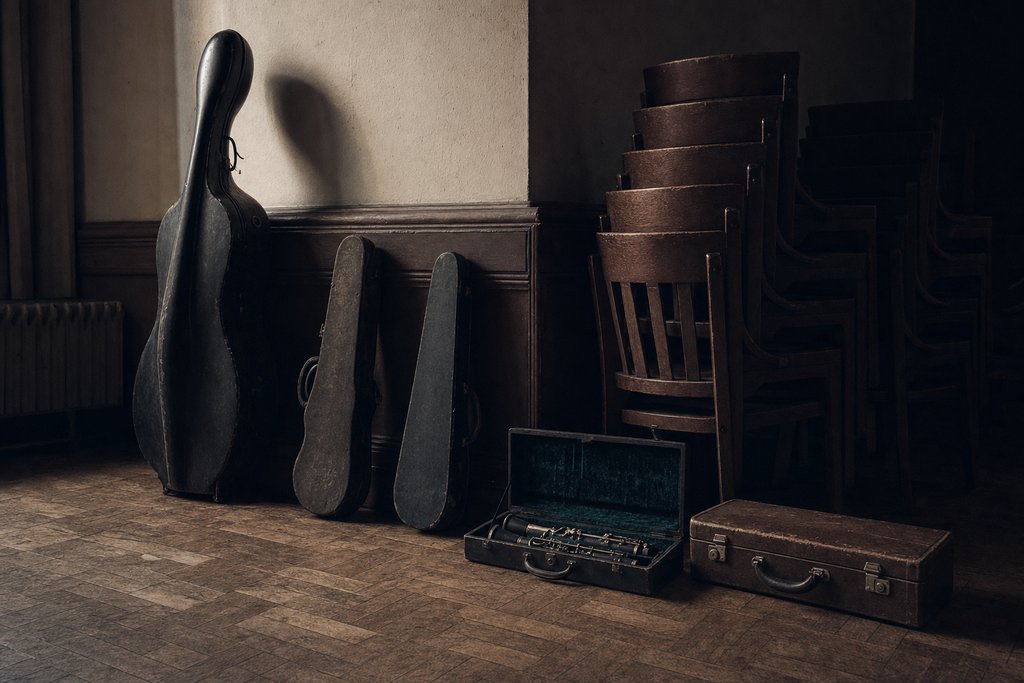
The seat that needs filling
A community wind band rehearses in a hall on a Tuesday, and there is a chair with nobody in it. It is the third clarinet chair, or the second horn, and it has been empty for a year. The part written for it is not difficult. It doubles the melody in places, holds a sustained note under other people’s tunes, and has long stretches of counting. Somebody in their first year of playing could sit there and be useful.
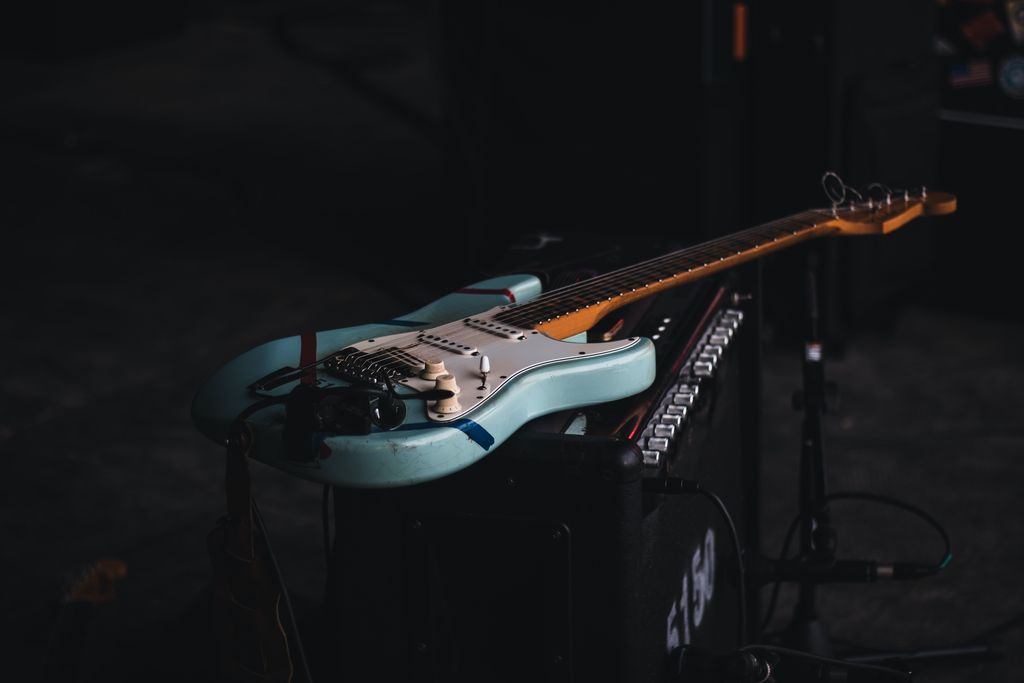
That empty chair is the most reliable guide to this question, and it is the one almost never used. Discussion of which instrument to take up tends to turn on how hard each one is to play, as though difficulty were a single quantity that could be put in order. It is not. Each instrument presents a different obstacle first, at a different point in the learning, and the choice worth making is which of those obstacles a particular person will tolerate for long enough to get past it.
The other half of the answer is where playing leads. An instrument is a route into a room with other players in it, and the routes are not equally direct.
What “difficult” actually refers to
Three separate things get called difficulty, and separating them changes the choice.
The first is whether the instrument produces a usable sound at all without training. Press a key on a piano and a correctly tuned note sounds, whatever the player’s state of knowledge. Draw a bow across a violin string and the result depends on bow speed, contact point, pressure and the placement of a finger on an unmarked string, any of which can be wrong. A trumpet gives nothing whatsoever until the player’s lips do something they have never done before. This is the obstacle that discourages people in the first month, and it is the one most beginners have in mind.
The second is co-ordination once the sound is reliable. Here the piano becomes the harder instrument, because it asks for two independent hands reading two staves, which is a genuinely unusual cognitive demand, while a clarinettist plays one line at a time for as long as they play at all. Players who abandoned the piano at the point where the left hand stopped being an accompaniment have met this.
The third is the ceiling: how much work separates competence from good. It is highest on the instruments where the player controls pitch and timbre continuously rather than in steps, which is to say the strings, and it is the reason a serviceable amateur violinist sounds obviously amateur in a way a serviceable amateur pianist does not.
Nobody chooses an instrument on the third of these, and everybody should look at it, because it determines whether the tenth year is rewarding or frustrating.
Where the transposition problem actually lives
This is the point at which the chronology of learning stops being useful, because the following has nothing to do with progress and everything to do with how the written material works.
Most wind instruments are transposing instruments. A written C played on a B flat clarinet sounds a B flat, a tone lower; on an E flat alto saxophone the same written C sounds an E flat, a major sixth lower; a French horn in F sounds a fifth below what it reads. Strings, flutes, oboes, bassoons, trombones and keyboards read at concert pitch, meaning written and sounding agree. The convention is historical rather than rational. It survives because it lets a player move between instruments of the same family and keep the same fingerings for the same written notes, which is a real convenience for the player and a permanent nuisance for everybody else.
For a beginner this is genuinely invisible. A clarinettist is handed a clarinet part, plays what is written, and sounds right. The transposition is a property of the notation, not a task.
It becomes a task in three situations, and they are worth knowing about before choosing, because two of them arrive early. The first is playing from a part written for a different instrument, which happens constantly in small ensembles and church groups where the available music never quite matches the available players. The second is playing from a piano score, which wind players in small groups end up doing constantly. The third is arranging, where the transpositions are the arranger’s basic working knowledge and the source of a specific class of error that is audible immediately and embarrassing in front of a room.
A player who reads only their own part will not meet the problem for years. A player drawn towards arranging or directing will meet it in the first month, and would do well to pick a concert-pitch instrument for that reason alone.
The cost floor, and the test that reveals it
The purchase price is the least useful number. What matters is the total of the instrument, the maintenance it needs whether or not it is played, the accessories it consumes, and the recoverable fraction if it is given up.
Strings need re-hairing and new strings, and a bow is a separate purchase of consequence. Woodwind needs reeds, which are consumable and inconsistent, and a periodic service. Brass needs valve maintenance and very little else, which makes it the cheapest family to keep once bought. An acoustic piano needs tuning twice a year and cannot be moved without paying somebody, and those two facts have ended more adult learning than any musical obstacle.
Digital instruments remove both. A weighted-key second hand digital piano needs no tuning, fits a flat, and can be played at midnight through headphones, and the difference in touch from an acoustic instrument stops mattering to the argument once you accept that the alternative is not practising at all.
The recoverable fraction is the number nobody calculates and the one that makes the decision reversible. Guitars have the deepest second-hand market of any instrument in Britain, and specialist dealers advertise a sell us your guitar service precisely because there is a reliable trade in instruments that were bought with enthusiasm and outgrown. The price such a dealer quotes against the same instrument new is the honest measure of what a year of trying cost. On a bassoon there is no equivalent figure, because there is no equivalent market.
Rental exists for the instruments where the resale market is thin, and it is the correct answer there rather than a lesser one. Fractional-size string instruments and school-scheme woodwind are rented because a child outgrows them on a schedule, and buying to that schedule is simply worse.
Which chairs are empty
Amateur orchestras and wind bands in Britain are short of the same instruments they were short of forty years ago: violas, double basses, French horns, bassoons, and almost always a second oboe. They are not short of flutes, and they are not short of guitarists, because nothing about a guitar leads towards a rehearsal room in the first place.
This asymmetry is worth more to a new player than any judgement about which instrument is finer. A viola player of moderate accomplishment is welcome in a decent amateur orchestra within a couple of years. A flautist of the same standard joins a queue. The instrument that gets somebody into a room where other people are playing is the instrument they will still be playing in a decade, because that room is what sustains the practice, and practice sustained by nothing but intention does not last.
Light orchestral music, the repertoire this publication is concerned with, was written by people who thought in exactly these terms. A studio arranger scoring for a broadcasting orchestra wrote for the players who were contracted and present, and the sound of the idiom is partly a consequence of which chairs were reliably filled: a full string section, harp, a modest wind complement, and a rhythm section. The instrumentation was never abstract. It was the room.
What this cannot tell you
The one thing a page like this cannot supply is how long it takes, and the reason is that the figures in circulation do not come from anywhere. Claims that a beginner reaches a given standard in a given number of months are repeated between teaching websites without attribution, and the studies that do exist follow children in schools with daily institutional practice, which describes almost nobody who reads about choosing an instrument as an adult. The grading systems measure prepared performance rather than the ability to hold a part in a rehearsal, and those two diverge sharply in both directions.
So the honest position is that the first obstacle of each instrument is well understood, the demand pattern in amateur ensembles is stable and documented by the ensembles themselves, the costs are checkable, and the timeline is not evidence. It is folklore that has been repeated for long enough to sound like measurement.
Frequently asked questions
Which instrument is easiest to learn?
The question has no answer in that form, because instruments do not share a difficulty scale. What they have is a different first obstacle. On a keyboard the note sounds correctly the moment a key goes down and the difficulty is co-ordination between hands. On a violin the player produces the pitch, so the first obstacle is intonation. On a trumpet it is the embouchure, and nothing at all happens until that works. Whichever obstacle a particular learner finds tolerable is the instrument that will feel easy to them.
How long before a beginner can play in a group?
Sooner than most people expect, and this is the part worth planning around. Community and amateur ensembles routinely carry second and third parts written to be playable within the first year, particularly in wind bands and in string orchestras. The limiting factor is rarely technique. It is reading at speed and counting rests accurately, both of which improve much faster in a rehearsal than alone.
Is the piano a good first instrument?
It is the instrument on which the written page and the sounding result line up most directly, which makes it the usual recommendation for anybody who wants to understand harmony. The cost is that it is a solitary instrument for a long time. A pianist is one per ensemble, sometimes none, so the sociable part of playing arrives later than it does for a clarinettist.
Does a child need a full-size instrument?
No, and using one is actively unhelpful. Strings are made in fractional sizes down to a sixteenth, and wind instruments have curved-neck and lightweight variants for the same reason. An instrument too large enforces a bad hand position that then has to be unlearned, which costs more time than the rental saved.
How much practice does a beginner actually need?
Frequency matters more than duration at the start. Fifteen minutes on six days does more for a beginner than two hours on a Sunday, because the physical part of playing is motor learning and consolidates between sessions rather than during them. Longer sessions become useful once there is repertoire long enough to need them.
What is a transposing instrument and does it matter when choosing?
It is an instrument whose written notes do not match its sounding pitch: a written C on a B flat clarinet sounds a B flat. It matters less than it sounds. A clarinettist reads their own part and the transposition is invisible to them. It becomes a real skill only for players who read other people's parts, and for arrangers, for whom it is unavoidable.
Should a beginner buy or rent?
Rent, if the instrument is large, fragile or unfamiliar, and particularly for a child who will outgrow it. Buy where the second-hand market is deep enough to make the decision reversible, which is the case for guitars and for digital keyboards and much less so for a bassoon.
Is a digital piano acceptable, or does it have to be acoustic?
For learning, a weighted-key digital instrument is adequate to a level well beyond beginner, and it removes the two practical obstacles that stop adult learners: it needs no tuning and it can be played through headphones. An acoustic piano responds differently under the fingers, and a player who intends to perform on one should eventually spend time on one, but that is not a first-year problem.
Which instruments are most in demand in amateur ensembles?
Consistently the ones fewest people choose. Amateur orchestras and bands are usually short of violas, double basses, French horns and bassoons, and long on flutes, and this has been true for decades. A player who picks a scarce instrument reaches a seat in a decent ensemble faster than one who plays a crowded one well.
Can an adult start from nothing?
Yes, and the pattern differs from a child's rather than being worse. Adults learn the theoretical material far more quickly and the physical material more slowly, and they lose the advantage of daily institutional practice. The evidence on late starters is thin, because almost all of the research on instrumental learning is done on children in schools.
Does the choice of teacher matter more than the choice of instrument?
For the first two years, on any reasonable reading of the outcomes, it matters more. A learner with a teacher who diagnoses a hand position quickly will progress on an awkward instrument. The reverse pairing produces a player with an entrenched fault, and faults established early on wind and string instruments are the hardest thing in this field to correct.
How is progress measured without exams?
By repertoire and by ensemble seat, which is how professional players describe their own progress. The graded exam system is a useful external checkpoint and a poor description of what a player can do, because it tests prepared pieces. Whether somebody can hold a part in a rehearsal at sight tells you more, and there is no certificate for it.
- Sources
- Checked
- ART/INSTRUMENT-CHOICE · 4 sources