Live music
Fantastic new bands of the United Kingdom, and their circuit
British popular music has always been produced by an apprenticeship system rather than by discovery, and the rooms that system runs through have changed hands far more than they have changed function.
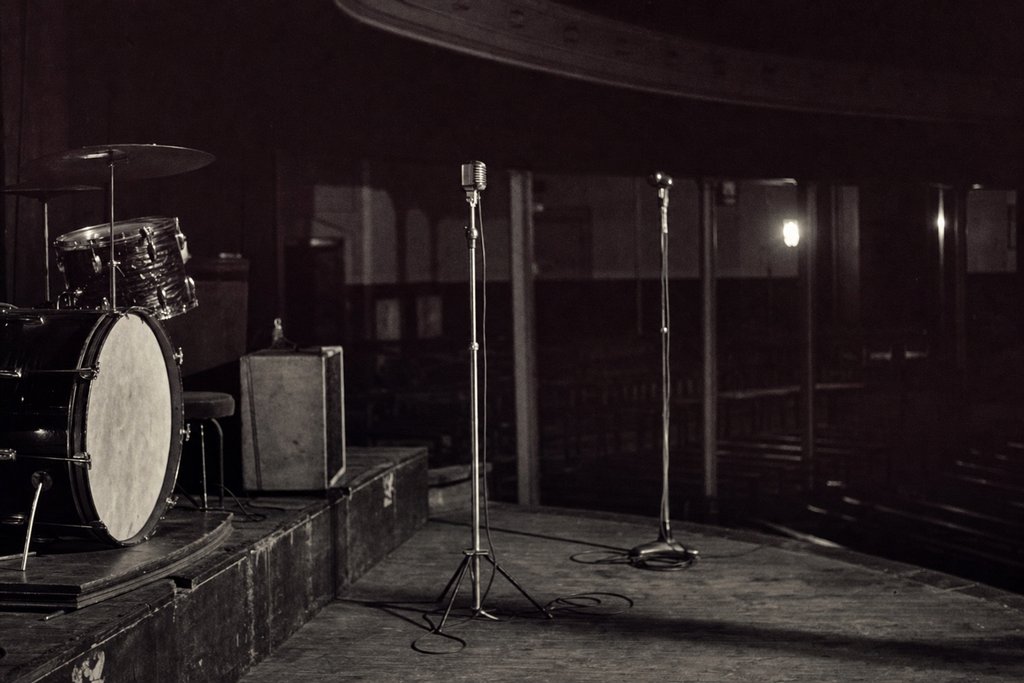
A Tuesday support slot in a room holding two hundred
A band loads in at six for a bill of three. They are on first, they have half an hour, and most of the fifty people present are there for somebody else. The fee is a share of a door that has not yet happened. They will play the same set in four more cities over the following fortnight, to rooms of the same size, and in one of them somebody who books a larger venue will be standing at the back.
This is the whole mechanism, and it has not been replaced by anything. Recorded music now reaches listeners without a record company deciding it should, which is a genuine change, and it has altered the sequence in which things happen rather than removing the part where a band becomes good by playing. The rooms holding between one hundred and four hundred people are where that happens, and they are the least secure part of British musical infrastructure.
What follows is about the circuit rather than about any current act, for a reason worth stating: a list of new British bands is out of date within two years, and the structure that produced them is a century old and still working. The names change on a cycle of about eighteen months. The rooms, the residencies and the three ways a live fee can be paid do not.

Why new British bands still come from the same rooms
British popular music has never had a training institution in the way that classical performance does. What it has had instead is a supply of paid work of steadily decreasing quality standards, arranged so that a player could earn while getting better in front of people who were not really listening.
The dance halls did this from the 1920s. A resident band played five or six nights a week for dancers who cared that the tempo was right and the tune recognisable, which is exactly the environment in which a young player learns to keep time, transpose on sight, follow a lead and stop making a particular mistake. Working men’s clubs did it into the 1980s, with a cabaret circuit and a booking system organised by concert secretaries. Seaside towns did it every summer.
The broadcasting orchestras sat at the top of the same structure. A player who came up through dance bands and pit work could end up contracted to a house orchestra, reading new arrangements at sight in a studio with an hour of rehearsal, and that is why the light orchestral repertoire this publication covers sounds the way it does. It was written for musicians who had spent a decade playing five nights a week and could therefore be handed something difficult on the morning of the recording.
The point is not nostalgia. It is that the pipeline was made of ordinary commercial work, and when that work disappears the training disappears with it, quietly, and nobody announces it.
Where the residencies went
One part of the old system survived almost intact, and it is the part people find surprising.
Holiday camps employed musicians at a scale nothing else in Britain matched. A large camp needed a band for dancing, a band or orchestra for the cabaret, and cover across a season running from spring to autumn, with an audience that turned over every week and therefore never tired of the set. For a young player this was the ideal apprenticeship: nightly performance, steady wages, an audience with modest expectations, and older professionals in the same band to learn from. A substantial proportion of British working musicians in the middle of the twentieth century went through it.
That format did not die. It turned into the packaged live-music weekend, where a venue with accommodation books a themed bill across two or three nights and sells the whole thing as a short break. Agencies exist specifically to supply those bills, and an account of a Butlins live music weekends booking describes recognisably the same arrangement as a 1950s camp season, compressed from twenty weeks into three days. The band plays to an audience that came for the weekend rather than for them, which is the condition under which a set gets tightened.
The other survival is the community group, and it is the one written about least. Brass bands, choirs, youth orchestras and amateur operatic societies teach ensemble discipline to a very large number of British players every week, without funding worth the name and without being counted as part of the music industry at all. They run their own teaching material, and one Hampshire male voice choir’s account of the work, published as Rhythm of life musical, sets out what a single number asks of adult amateurs who mostly do not read music. What a player takes out of two years of that is the ability to count, to watch a conductor, to come in accurately and to hold a line against three other parts, which is most of what any working band actually requires.
The room before the room
A band needs somewhere to be loud before it needs somewhere to perform, and this is the part of the pipeline that has quietly become the expensive one.
Rehearsal space is an industrial-property problem dressed as a musical one. What a band requires is a room that can be occupied for three hours at a predictable hour, in a building where nobody is trying to sleep, reachable while carrying an amplifier. In practice that means light-industrial units, railway arches, church halls and the back rooms of pubs, which is to say precisely the building stock that urban residential conversion has been consuming for thirty years. The rooms did not become unavailable because of anything to do with music. They became flats.
The consequence is a geographic one and it is visible in where bands come from. Cities with cheap industrial fringe still produce them in numbers. Cities that have converted that fringe produce fewer, and the acts that emerge there tend to be solo or duo formats, because two people can rehearse in a bedroom and five with a drum kit cannot. Format follows rent.
Community groups sidestep this entirely, which is part of why they persist. A choir or a brass band rehearses in a hall it has used for decades on terms set long ago, and a hall booked by an established local organisation is a different proposition from one booked by four teenagers.
How the money is put together
This is where the chronology stops, because the following is structural and applies equally to a 1938 dance band and a guitar band on a Tuesday.
A live booking is paid in one of three shapes. A fee is a fixed sum for the performance, agreed in advance, and the promoter keeps whatever the door produces. A door split gives the act an agreed percentage of ticket income and no floor at all. A guarantee combines the two: the act receives the greater of a stated minimum or an agreed share, so the promoter absorbs a bad night and the act benefits from a good one. Support acts are usually offered the first shape or nothing, headline acts negotiate the third, and the transition between those two positions is what a band is actually working towards during the years of support slots.
Recorded income is a separate structure and is commonly confused with itself, because a song and a recording of a song are two different pieces of property. The composition carries performing and mechanical rights, administered for writers and publishers by a collecting society. The recording carries its own rights, which is what generates money when a broadcaster plays that specific record. A band that writes and records its own material owns both and has to register both, and failing to do the second is one of the more common and least visible ways of losing money.
Broadcast used to sit on top of this in a way that shaped the whole field. Agreements between the Musicians’ Union and the broadcasters restricted how much recorded music could be played, which meant a broadcaster wanting to fill hours had to employ players to make music live. That single contractual fact is the reason Britain had staff orchestras, and its relaxation is the reason it stopped having them. Nothing about the music explains it. A negotiated limit on the use of gramophone records does.
What the numbers will not support
The claim repeated everywhere is that live work provides the majority of an emerging act’s income, and the direction of that claim is almost certainly correct. The sourcing is not what its confidence implies. The figures come from surveys run by industry bodies among respondents who chose to answer, which systematically over-represents acts organised enough to be on a mailing list and to fill in a form. Nobody holds a register of working bands, so there is no sampling frame, and a proportion calculated without one is an estimate wearing the clothes of a measurement.
Venue closures are counted the same way, by the organisations campaigning about them, for the same reason: no public body counts small music venues as a category. That does not make the counts wrong. It does mean the only people producing the evidence are the people with an interest in its direction, and if you are going to quote a figure from this field it is worth knowing that about all of them.
What is solid is the structure. The rooms exist, the residency format has survived in a new commercial wrapper, community ensembles are training players continuously, and the three shapes of a live fee are unchanged from the era of the dance bands. The arithmetic of a given year is soft. The mechanism is not.
Frequently asked questions
How do new British bands actually get started?
Through repetition in small rooms, almost without exception. A band plays support slots and midweek bills in venues holding under three hundred people, builds a local following large enough that a promoter in the next city will take a risk on them, and repeats that outward. The route is unglamorous and it is also the only one with a consistent record of working.
Is the small-venue circuit shrinking?
The sector's own advocacy bodies report sustained closures of grassroots venues, and the pressures they name are rent, business rates, noise complaints following residential development, and the loss of the midweek trade that subsidised weekend risk. The counting is done by the interested parties because nobody else counts it, which is a real limitation on the figures rather than a reason to dismiss them.
What is a residency and why does it matter?
A residency is a booking for a run of nights or weeks in the same venue rather than a single date. It matters because it forces a band to hold an audience that has already heard them, which is a different and harder skill than playing to strangers once. Historically it is where British dance bands and light orchestras were trained, and holiday camps and seaside venues still work this way.
Do streaming platforms replace the live circuit?
They replace the record shop, not the rehearsal. Recorded distribution reaches people who were never going to be in the room, and the per-play sums involved mean it rarely constitutes a living for an act without a large catalogue. What it has genuinely changed is the order of events: an act can now have listeners in a city before it has ever played there.
What is the difference between a fee and a guarantee?
A fee is a fixed payment for the performance. A guarantee is a floor: the act receives the greater of that figure or an agreed share of the door, so the promoter carries the downside and the act keeps the upside of a good night. Support acts are more often offered a fee, or nothing, and a percentage of a headline door is where the arithmetic of touring starts to work.
Do amateur and community groups feed the same circuit?
They are the part of it that receives no attention. Community choirs, male voice choirs, brass bands and youth orchestras are where a large number of British players learn ensemble discipline, and they run their own teaching programmes with their own repertoire. A player who has held a part in a choir for two years can count, watch a conductor and come in accurately, which is most of what a working band needs.
Why do holiday camps keep appearing in British music history?
Because they were year-round employers of musicians on a scale nothing else matched. A camp needed a resident band for dancing, another for cabaret, and cover for both across a long season, which meant steady wages, nightly playing and an audience that changed weekly. A very large number of British professional musicians of the twentieth century passed through that system, and the format survives in the live-music weekend.
What does a band need to register before it earns anything?
Writers and publishers register with a collecting society for performing and mechanical rights, and recordings are separately registered so that broadcast and public performance of the recording is accounted for. The distinction between the composition and the recording of it catches people out constantly, because they are separate rights with separate money attached and a band that writes and records its own material holds both.
Is it easier or harder to start a band now than in 1960?
The two are not comparable in a single direction, which is why the question produces such confident and contradictory answers. Recording and distribution have gone from prohibitive to nearly free. Steady paid work of the kind that let a young player learn on somebody else's time has largely gone, and rehearsal space in cities has become expensive. The barrier moved rather than falling.
How much of a new band's income comes from live work?
Most reporting says the majority, and the sourcing for that is weaker than the confidence with which it is repeated. The figures come from surveys run by industry bodies with self-selected respondents, which will over-represent acts organised enough to answer a survey. The direction is almost certainly right. The proportion should be treated as an estimate rather than a measurement.
What should someone do first if they want to book a band?
Decide whether you are booking a performance or filling a room, because those buy different things. A booking agency supplies acts sized and priced for a function and carries the risk of somebody not turning up. Approaching a local band directly is cheaper and puts that risk on you, which is fine for an event where the music is not the reason people came.
Does this site cover contemporary bands?
Only where they connect to its subject, which is British light music and the orchestral and broadcasting world around it. The connection here is structural rather than stylistic: the circuit that trains a guitar band in 2026 is a direct descendant of the one that staffed the dance bands and the broadcasting orchestras, and it is the same rooms doing it.
- Sources
- Checked
- ART/NEW-BANDS-UK · 4 sources