Screen
The Robert Farnon filmography, and why its credits and dates disagree
Reference sources put his film count above forty and cannot agree on the year of his best known picture. Both of those facts have the same cause, and it is not carelessness.
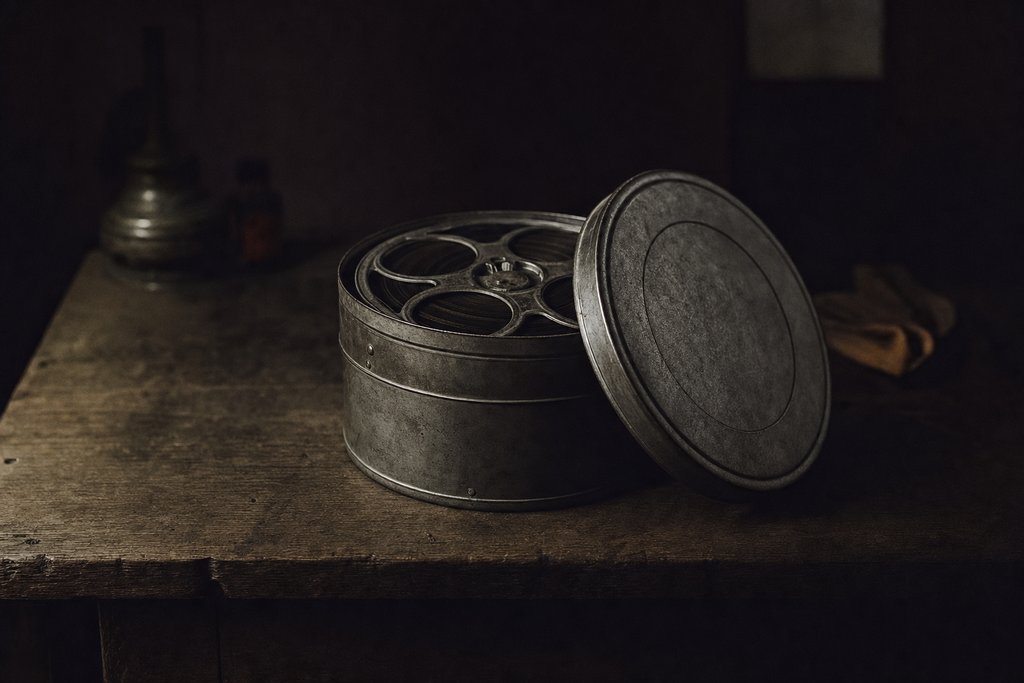
A cue sheet, and a running time
A film is cut before most of its music exists. What the composer receives is a sequence of timings: a cue beginning at a stated point, running for a stated number of seconds and frames, ending where the scene ends. The music has to arrive and leave on those numbers, and the emotional job has to be done inside them.
That is the craft the Robert Farnon filmography is a record of, and it is the same craft as the light orchestral pieces with the constraint tightened. A three-minute concert piece has a length the composer chose. A film cue has a length the editor chose, often to the frame, and it may have to change on Thursday because the scene was recut on Wednesday.
British films of the late 1940s were made fast, and the composers who worked on them were valued for exactly this.
The credits that are secure
A handful of pictures appear consistently across every source and are the spine of the filmography.
The two Herbert Wilcox comedies come first in both chronology and consequence. Spring in Park Lane and Maytime in Mayfair, the Anna Neagle and Michael Wilding vehicles, were among the biggest British box-office successes of their period, and the music is the kind of scoring this idiom existed to produce: light, metropolitan, wholly at the service of a comedy of manners. Then Captain Horatio Hornblower R.N. in 1951, which is a different assignment entirely, requiring the naval and action writing that a light orchestral specialist was not obviously the candidate for.
Later credits spread across decades and genres without settling into a pattern. The Road to Hong Kong, the last of the Hope and Crosby series, in the early 1960s. Shalako, a western shot in Spain, in 1968. Bear Island, an adaptation of an Alistair MacLean thriller, at the end of the 1970s. A composer taking work of that variety is a working professional rather than a stylist with a niche, and the filmography reads accordingly.
Beyond those the reference sources say “more than forty films” and stop, which is where the interesting problem starts.
The Hornblower assignment
One credit in the list does not fit the description usually given of him, and it is worth stopping on because it is the best evidence about the range of the technique.
A composer identified with light metropolitan scoring was handed Captain Horatio Hornblower R.N., a Napoleonic naval adventure requiring broadside action, shipboard ceremony and open sea. Nothing in the drawing-room comedies prepares a listener for that assignment, and on the face of it the producers had hired the wrong specialist.
What the choice reflects is how this profession actually worked. The relevant qualification was not a stylistic affinity for the subject. It was the ability to deliver correctly timed orchestral music of any character, at length, on schedule, and to conduct it to picture. A composer who had spent years writing to a broadcaster’s running times could write a battle as readily as a waltz, because the difficult part was never the idiom.
It also cuts against the way light music composers are usually filed. The category describes what somebody was employed to write most often, not the limit of what they could write, and it has done real damage to the reputations of a generation of British composers who were assumed to be incapable of anything larger because nobody paid them to attempt it. The three symphonies at the end of his catalogue are the same point made by the composer himself.
Wall of Fear, and how a theme gets chosen instead of written
This is the point at which the chronology has to be abandoned, because the following is not an event in a career. It is a mechanism.
The theme for Secret Army, the BBC drama about the wartime escape lines, is one of the more effective pieces of television music of its decade. It was not written for the programme. It is an arrangement of Wall of Fear, a stock track Farnon had already composed for a publisher’s library catalogue, filed there under a title that describes an emotional situation because that is how such catalogues are indexed.
Somebody making a series about people hiding from an occupying army needed music conveying exactly that, went to a library, looked under the appropriate heading, and found it. The piece then became the signature of a series it had no connection to when it was written, and it is now remembered as the Secret Army theme by people who would be surprised to learn it predates the programme.
Consider what this does to the idea of a filmography. The credit is real, the music is his, and yet the work was not commissioned by that production, was not composed for that subject, and would have gone to a different programme entirely had a different producer reached the index card first. Its presence in the list is partly an accident of who was looking for tense atmosphere in which year.
And the reverse case is the larger one. For every library track that became a recognisable theme, far more were licensed quietly into productions that credited the publisher, the music supervisor or nobody at all. Those uses are not in any filmography and cannot be assembled into one, because the records that would document them are the publisher’s licensing files rather than anything a film historian consults.
The library catalogues themselves descend from the silent-cinema photoplay collections, which were compiled so that a cinema pianist could find music for a chase or a deathbed. The indexing principle never changed. It is still mood, action and duration, and it is still the reason a composer’s screen output cannot be recovered from screen credits.
Television, which is the half that was heard
The film credits carry the prestige. The television work is what kept him audible, and if you know one piece of his without knowing you do, it is almost certainly from television.
The march written for the BBC’s Colditz in the early 1970s is the clearest example. A prisoner-of-war drama running across two series needed something with military bearing that was not triumphal, and what it got is a piece sturdy enough to have outlived the programme: it is still published as orchestral sheet music and still played by light and concert orchestras, which is a rare afterlife for a television theme. Secret Army followed later in the decade. The signature music associated with Panorama put him in front of a current-affairs audience every week for years.
The arithmetic here is worth doing. A successful British feature of 1948 might be seen once by a large number of people. A weekly series broadcast over two or three years reaches its audience repeatedly, and a current-affairs programme does so for a decade or more. Measured by how many times a piece of music entered somebody’s ear, the television work outweighs the entire film list.
Why the dates do not agree
The dating problem in this filmography is not sloppiness in the sources. It is a consequence of a film having four candidate dates and reference works choosing among them silently.
There is the year of production, which is when the music was written. There is first release in the home market, which is what a British reference work usually means. There is release elsewhere, which is what an American source often means, and it can be a year or two later. There is a re-release, which some databases record as though it were the film. A cataloguer picks one and prints it without a label, and a reader comparing two sources sees a contradiction where there is only an unstated definition.
The Wilcox comedies show it plainly: each is given at least two different years across sources that are otherwise reliable, and the spread is wider than a simple error would produce. The safe practice is to record which source gave a date rather than to reconcile the dates, and to treat any filmography that shows a single unqualified year for every entry as having done the reconciling on the reader’s behalf without saying how.
What the filmography can and cannot establish
The secure statements are these. He scored British features from the late 1940s onwards, including two of the period’s largest domestic successes. He worked across genres and decades rather than settling into one. He wrote television themes that outlived their programmes, and at least one of them is still in print as concert music. The named credits are not in dispute.
The insecure statement is the total. A count above forty is repeated because it is the figure available, and it counts commissioned screen credits under a convention that omitted arrangers, omitted orchestrators, and omitted library licensing entirely. The true extent of his music on screen is larger than the list and is not recoverable from the same kind of source that produced the list.
So the correct reading of this page is that the credits are a sample of the screen work rather than an inventory of it, and the sample is biased in a knowable direction: towards the commissions, and away from everything that a producer simply selected from a catalogue and used.
Frequently asked questions
How many films did Robert Farnon score?
Reference sources put the figure above forty, and the number should be read as an order of magnitude rather than a count. Scoring credits on British films of the period were inconsistently recorded, arrangers and orchestrators frequently went uncredited, and library music licensed into a production carries no composer credit at all. The confident part is the scale, not the total.
What are his best known film scores?
The Herbert Wilcox comedies Spring in Park Lane and Maytime in Mayfair, which were among the largest British box-office successes of their day, and the naval adventure Captain Horatio Hornblower R.N. in 1951. Later credits include The Road to Hong Kong, the western Shalako and Bear Island.
Why do sources give different years for the same film?
Because a film has four candidate dates and reference works pick different ones without saying so: the year of production, the year of first release in its home market, the year of release elsewhere, and sometimes the year of a re-release. British films of the late 1940s are particularly affected, and Spring in Park Lane and Maytime in Mayfair are each given at least two years across otherwise reliable sources.
What television themes did he write?
The best known are the march for the BBC prisoner-of-war drama Colditz, the theme for Secret Army, and the signature music associated with Panorama. The television work is what keeps him audible: those themes were heard weekly by audiences far larger than any of the films reached.
Is it true that the Secret Army theme was not written for the programme?
It is, and it is the single most instructive credit in his filmography. The theme is an arrangement of Wall of Fear, a stock library track he had already written for a publisher's catalogue. A production needing tense atmosphere selected it from an index, and it became the signature of a well-remembered series without having been composed for it.
What is a stock or library track?
Music written and recorded for a publisher's catalogue rather than for a particular production, licensed to whoever needs it. Producers chose from index cards describing mood, action and duration, which is why the titles describe situations. The catalogues descend directly from the silent-cinema photoplay collections, which were organised the same way and for the same reason.
Does library use appear in a filmography?
Almost never, and this is the largest gap in any composer's screen credits from this period. A licensed track carries the production's music credit rather than the composer's, so a piece can appear in dozens of programmes without a single one of them naming who wrote it. A filmography lists commissions. It does not list uses.
Was he credited on everything he worked on?
No. Arranging and orchestrating for another composer's score was normal work and normally uncredited, and the convention was industry-wide rather than personal to him. This is why a filmography built from screen credits understates the involvement of anybody who worked in this part of the business.
Which is the more important half of the screen work, film or television?
Television, on any measure of who heard it. A weekly series in the 1970s reached an audience across a run that no British feature of the 1940s could match, and the themes for Colditz and Secret Army are the pieces of his that strangers can still hum. The film credits carry more prestige in a reference entry and less weight in the world.
Is the Colditz march still available as printed music?
Yes. It is published as orchestral sheet music and remains in use by concert and light orchestras, which is unusual for a television theme and a fair indication that it works as a piece independently of the programme it announced.
How would a researcher establish a disputed credit?
Through the production's own paperwork rather than through reference works: music cue sheets, the publisher's licensing records, and the union session returns for the recording. Where those survive they are decisive. The general reference entries repeat each other, so finding the same claim in five places is not corroboration.
Does the uncredited work matter, or is it a technicality?
It matters, because it changes what the credits mean. If the recorded output of a career is substantially larger than the credited output, then a filmography is a sample rather than a record, and the confident sentence to avoid is the one that begins by saying how many films somebody scored.
- Sources
- Checked
- ART/RF-FILMOGRAPHY · 4 sources